REVIEW · KOCHI
Fort Kochi Local Sightseeing Tour
Book on Viator →Operated by Forte Kochi Tuk-Tuk Tour · Bookable on Viator
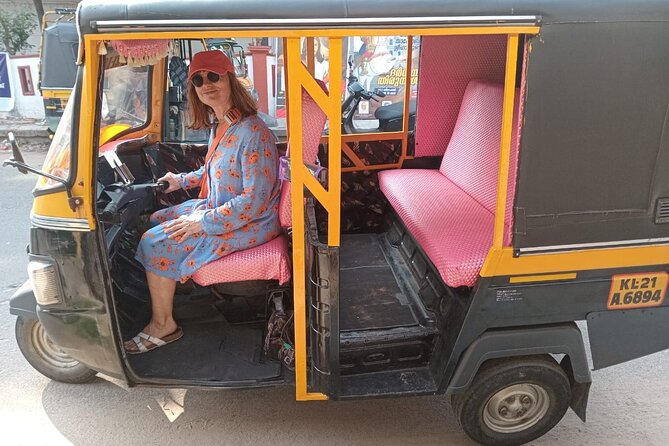
Old Kochi goes by faster on a tuk-tuk. This Fort Kochi local sightseeing tour strings together the big landmarks—Chinese fishing nets, European churches, and the Paradesi Synagogue—with practical time inside the neighborhoods, not just roadside views; tuk-tuk drives keep it smooth, and I liked having a guide such as Shihab who was friendly and accommodating with pickup. The only thing to watch is pacing: most places are brief (about 20 minutes each), so if you want long museum time, you’ll likely want to plan extra time afterward.
You’ll also get real convenience here: pickup is offered, you use a mobile ticket, and it’s set up as a private outing for your group only. That matters in Kochi, where streets can get busy and navigation isn’t always simple on foot.
In This Review
- Key things I’d plan around
- Fort Kochi by tuk-tuk with Shihab: how the route feels
- Cheena vala Chinese fishing nets and Fort Kochi Beach: fast, photogenic, and worth it
- The European layer: Dutch Cemetery, St. Francis Church, and Santa Cruz Cathedral
- Dhoby Khana Public Laundry: watching tradition at work
- Mattancherry Palace: Kerala murals and a Portuguese/Dutch hybrid identity
- Jew Street and Paradesi Synagogue: a walking chapter you can actually follow
- Spice market and Jain Temple: senses now, schedule later
- Cochin Thirumala Devaswom Temple: local worship with institutional importance
- Price and value: why $12 makes sense for a full Fort Kochi loop
- Timing, pacing, and what to wear (so the day feels good)
- Who should book this Fort Kochi local tour
- Should you book it? My straight answer
- FAQ
- How long is the Fort Kochi Local Sightseeing Tour?
- What does the tour cost?
- Is pickup offered, and do I need a paper ticket?
- Is this a private tour?
- Which stops have admission tickets included?
- What is the cancellation policy?
Key things I’d plan around
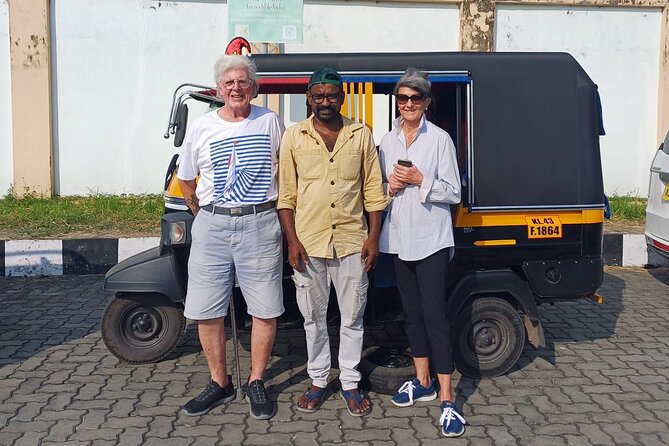
- Tuk-tuk timing that fits 4–5 hours without turning it into a marathon
- A guide like Shihab who helps make the pickup side easy
- Admission included at several major stops (and one stop is free)
- A route that layers cultures: Portuguese/Dutch influence, Jewish heritage, and local Kerala worship
- Practical neighborhood stops beyond the postcard sights, like Dhoby Khana and the spice market
Fort Kochi by tuk-tuk with Shihab: how the route feels
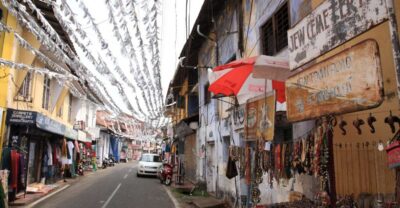
Fort Kochi is one of those places where history shows up everywhere—on church walls, inside old courtyards, and in street-level routines. What I like about this tour is that it does not force you into one “big attraction” after another. Instead, you hop between short, high-impact moments and let the tuk-tuk fill in the connections.
The experience is designed for a relaxed city loop. You’re moving through a mix of waterfront, churches, cemeteries, a palace museum area, a synagogue walk, and then onward to markets and temples. You’re not left guessing what to do next; the day flows from stop to stop.
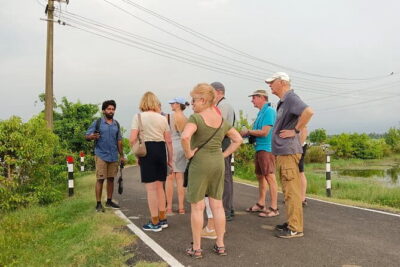
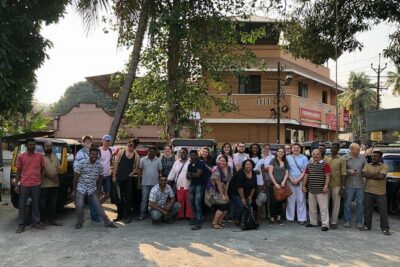
My favorite part was the guide’s role in making it feel easy. With Shihab, pickup was handled smoothly even though we were outside the usual pickup area, which is exactly the kind of detail that saves time and stress in a new city. His vibe was friendly and accommodating, and that kind of calm helps when you’re mixing walking with quick rides.
You can also read our reviews of more tours and experiences in Kochi.

Cheena vala Chinese fishing nets and Fort Kochi Beach: fast, photogenic, and worth it
The tour starts with Chinese fishing nets (Cheena vala)—stationary lift nets fixed as land installations. Even if you’ve seen photos before, seeing how they’re set up by the shore gives the scene a lot more meaning. This is one of those “iconic but also practical” sights: it’s not just architecture or a monument, it’s a working fishing system that shaped the coastal look of the area.
Right after that, you get time at Fort Kochi Beach along the Arabian Sea. The beach stop is short (about 20 minutes), so treat it like a reset. You’ll be able to stroll, look for photo angles, and take in sea air, but you shouldn’t assume it’s a long hangout slot.
Best use of this time: keep one small window for photos and one for watching locals and daily activity. If you only do photos, you’ll miss the quieter payoff of this part of Fort Kochi.
The European layer: Dutch Cemetery, St. Francis Church, and Santa Cruz Cathedral
Fort Kochi’s European history can feel abstract until you stand near it. This tour gives you multiple snapshots close together, so the colonial chapter feels like a trail you can actually walk along.
First comes the Dutch Cemetery, known for the imperial inhabitants who left their homelands centuries ago to expand their empire. The stop is brief and admission is listed as free here, which is a nice bonus in both cost and time. I find cemeteries especially memorable when the visit isn’t rushed—so even though the time is short, you still get that “slow down and look” effect if you pause instead of constantly walking.
Next is Church of Saint Francis (St. Francis Church), originally built in 1503. That date alone puts it among the oldest European churches in India, and the church is described as a witness to the old European colonial settlements in the region. Again, the visit window is about 20 minutes, so focus on a few things: the church presence itself and the surrounding historic atmosphere rather than trying to read everything.
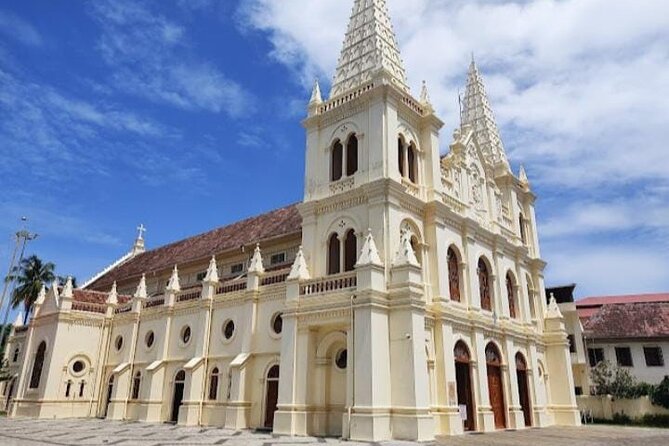
Then you move to Santa Cruz Cathedral Basilica, one of the eight Basilicas in Kerala and described as one of the finest and most impressive churches in India. If churches aren’t usually your thing, you still might enjoy this stop because it’s not only about worship—it’s also about how Fort Kochi’s buildings tell the story of contact, trade, and settlement.
Possible drawback: if you’re the type who loves slow church interiors and long guided explanations, the 20-minute pacing could feel tight. A practical solution is to spend your extra time after the tour on the church you liked most.
Dhoby Khana Public Laundry: watching tradition at work
One of the most interesting stops on this route is the Dhoby Khana Public Laundry, founded in the early 1700s for cleaning laundry at a central community location. This is not a museum stop where you only look. It’s about seeing how people manage everyday tasks in a shared space.
The tour’s time here is around 20 minutes, so you’re not meant to watch everything start-to-finish. Still, it’s a valuable contrast to the major churches and palace-style buildings. You get a grounded sense of Kochi life—community routines, public infrastructure, and heritage that continues to matter.
For your own experience, this is a good stop to go into with an observational mindset:
- Watch how the space is used
- Look at how the washing is described as being performed in the old facility
- Take a few photos, but keep your focus on people and activity rather than just angles
Mattancherry Palace: Kerala murals and a Portuguese/Dutch hybrid identity
After you move toward the Mattancherry area, you’ll visit Mattancherry Palace, described as a Portuguese palace popularly known as the Dutch Palace. The palace is also a museum under the ASI, and it features Kerala murals with portraits and exhibits related to the Rajas.
What I like about this stop is that it works for different interests. If you care about art, you get murals. If you care about history, you get the sense of how different colonial powers left their marks—but the palace still expresses Kerala’s visual language.
The palace time is also about 20 minutes, so I’d treat this as a “first look” rather than a full museum day. If you feel pulled in once you’re inside, you’ll probably want more time later—this tour isn’t designed to replace a longer museum visit.


Jew Street and Paradesi Synagogue: a walking chapter you can actually follow
One of the best parts of this tour is the walk through Jew Street toward the Paradesi Synagogue. The tour description makes it clear you’re not just passing by; you spend time walking the historic street area, which helps you understand the neighborhood layout and how the synagogue fits into the street life.
The Paradesi Synagogue is described as the oldest active synagogue in the Commonwealth of Nations. It was constructed in 1568 and is one of seven synagogues of the Malabar Yehudan community.
This stop feels meaningful because it’s specific and time-bound in the way most heritage sites are not. You’re looking at an active heritage place, not just an abandoned relic. The visit window is about 20 minutes, but even in that time, you can get a real sense of place if you slow down for the street walk and then focus during the synagogue stop.
Practical tip: plan your pace. Jew Street is best enjoyed when you’re walking slower and reading the environment instead of treating it like a corridor between cars.
Spice market and Jain Temple: senses now, schedule later
After the synagogue area, the tour shifts into the kinds of stops that make Fort Kochi feel like a working city instead of a timeline.
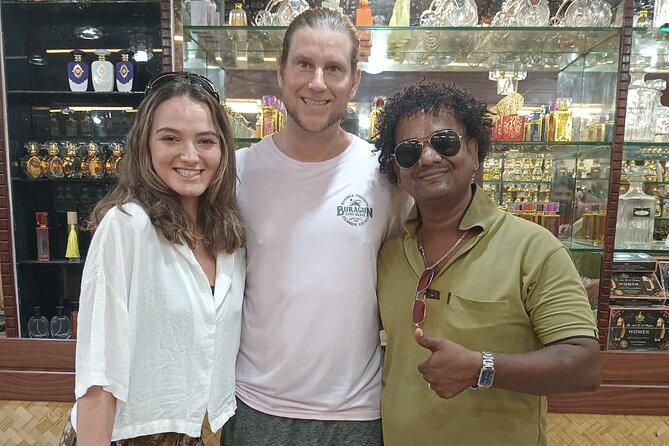
First up is the Cochin Spice Market, described as a down-to-earth shop with polished displays where exotic spices are sold in bulk. This is where the tour becomes a sensory experience: you’ll smell spices, see how they’re presented, and get a chance to pick up something practical if you want a souvenir that actually relates to Kerala.
Then you visit the Jain Temple. This one has a very distinctive claim to fame in the tour description: a pigeon show and feeding held every day at noon. The stop is about 20 minutes, so the experience depends on timing, but it’s still a memorable cultural feature to have on a route like this.
Even if you’re not religious, you can enjoy a temple stop when you treat it as a window into local ritual. The point is not to “perform” interest—it’s to observe how faith shows up in daily life and what visitors can do respectfully.
Cochin Thirumala Devaswom Temple: local worship with institutional importance
The route ends with more local worship at Cochin Thirumala Devaswom Temple, also called Gosripuram. The tour notes that it is the biggest and most important socio-religious institution of the Gowda Saraswat Brahmins of Kerala.
It’s situated at Cherlai in the heart of Matta (as described in the tour information you’re working from). The stop here is again about 20 minutes, with admission included.
This is a good final “tone-setter” for your day because it brings the focus back to Kerala and community practice, not just the coastal European/Jewish/Kerala-history highlights earlier in Fort Kochi.
Price and value: why $12 makes sense for a full Fort Kochi loop
At $12.00 per person, this tour sits in a very budget-friendly zone for a city route that touches multiple historic and faith-based sites. The big value isn’t only the ticket price—it’s the way the day is structured.
You get:
- Pickup offered and tuk-tuk transport connecting multiple areas
- A private setup for your group only
- A schedule that covers major highlights plus more “local life” stops like Dhoby Khana
- Admission ticket inclusion at several named stops, with the Dutch Cemetery free per the tour details
So, even though you’re only in each place for around 20 minutes, the cost-to-coverage ratio is strong. You’re paying for convenience and for a guided sense of sequence. In a place like Kochi, where getting from one historic pocket to the next can take time, this kind of routing is usually where the real money-saver is.
If you’re traveling solo, this tour can be a particularly good deal because you avoid “I’ll figure it out myself” taxi costs that add up quickly. If you’re a small group, the private format helps you keep the pace matched to your preferences.
Timing, pacing, and what to wear (so the day feels good)
The tour runs about 4 to 5 hours. That’s a sweet spot for Fort Kochi: long enough to cover meaningful landmarks, short enough that you don’t feel like you’ve been walking all day.
Your schedule will likely feel like:
- Quick cultural and historic stops (around 20 minutes each)
- Short walking time around historic streets toward major sites
- Tuk-tuk rides that reset your energy
What I’d wear:
- Comfortable shoes (because some parts are walking-based, especially around street areas)
- Light layers (churches and shade vary)
- A hat or cap for sunny coastal time at the beach and fishing nets
And here’s a mental trick: don’t try to “finish” Fort Kochi. Try to collect impressions. The tour is built for getting bearings fast and understanding the layers of the area.
Who should book this Fort Kochi local tour
This is a strong choice if you:
- Want a single, guided loop that covers multiple heritage layers in one afternoon
- Prefer a mix of big-name landmarks and neighborhood-style stops
- Appreciate a friendly guide who helps with practical details like pickup timing
It may be less ideal if you:
- Hate time limits at churches or museums
- Want long, in-depth explanations at every stop
- Plan to spend extended hours shopping or sitting with photos at one location
Should you book it? My straight answer
If you’re looking for an efficient, well-paced way to see Fort Kochi’s main storylines—Chinese fishing nets, European churches and cemeteries, the Paradesi Synagogue area, plus practical local stops—book it. The price is fair, the transport is built in, and the best signal here is the guide experience; having someone like Shihab who stays accommodating makes the whole day feel smoother.
If you know you want longer stays at a couple of your top interests, consider doing this tour first, then returning on your own to the places you want to slow down at. This tour gives you the map. You choose the pace after.
FAQ
How long is the Fort Kochi Local Sightseeing Tour?
The tour lasts about 4 to 5 hours.
What does the tour cost?
It is listed at $12.00 per person.
Is pickup offered, and do I need a paper ticket?
Pickup is offered, and you’ll use a mobile ticket.
Is this a private tour?
Yes. It’s a private tour/activity, and only your group participates.
Which stops have admission tickets included?
Admission ticket inclusion is listed for the Chinese Fishing Nets, Fort Kochi Beach, Church of Saint Francis, Santa Cruz Cathedral Basilica, Dhoby Khana Public Laundry, Mattancherry Palace, Paradesi Synagogue, Cochin Spice Market, Jain Temple, and Cochin Thirumala Devaswom Temple. Dutch Cemetery is listed as free.
What is the cancellation policy?
Free cancellation is available up to 24 hours in advance for a full refund. If you cancel less than 24 hours before the experience’s start time, the amount you paid will not be refunded.