REVIEW · KOCHI
Highlights of Cochin: Group Tour from Cochin Port
Book on GetYourGuide →Operated by Carnival Tours Kochi · Bookable on GetYourGuide
Cochin packs a lot into four hours. This cruise-port group tour threads together Fort Kochi and nearby old quarters with working-life stops, big Portuguese-era churches, and the spice-scented streets of Jew Town. I like that it’s tightly planned for a port day, so you get a real sense of how the city fits together rather than just ticking off landmarks.
My favorite part is the combo of Chinese Fishing Nets plus the churches at St Francis and Santa Cruz Basilica, all explained in plain English. One thing to plan around: there’s a dress code for houses of worship (no shorts or sleeveless tops; shoulders and knees covered), plus a small amount of walking—so it’s not the best choice if you need step-free access.
In This Review
- Key takeaways before you go
- From the ship berth to Fort Kochi: tight timing, real orientation
- Chinese Fishing Nets and Dhobi Khana: see work, not just monuments
- St Francis Church and Santa Cruz Basilica: Portuguese faith in white stone
- Mattancherry Palace murals and Paradesi Synagogue details
- Jew Town and spice streets: short time, smart shopping
- Price, pacing, and comfort tips for a 4-hour port day
- Should you book this Cochin Port tour?
- FAQ
- How long is the Cochin Port group tour?
- Where do I meet the tour?
- What’s included in the price?
- Is lunch included?
- What should I wear for churches and museums?
- Is there a lot of walking?
- When is the Jewish Synagogue or Dutch Palace closed?
- Is this tour suitable for people with mobility impairments?
- What’s the cancellation policy?
Key takeaways before you go
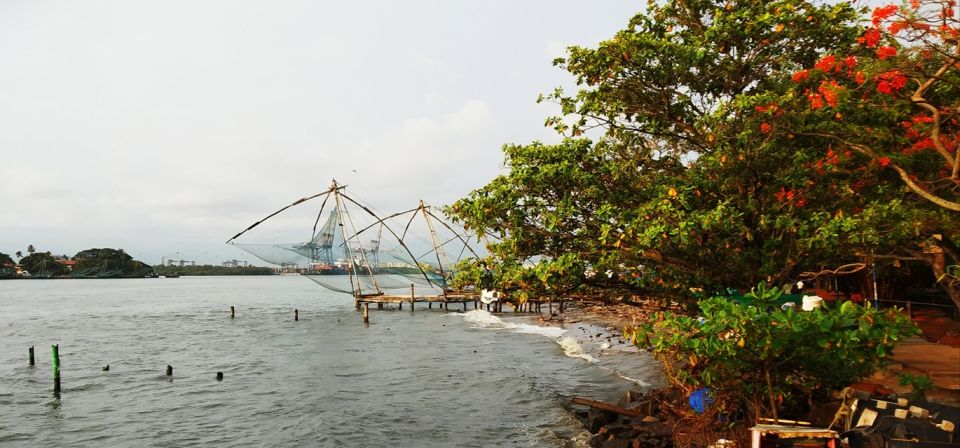
- Chinese Fishing Nets still earn livelihoods: you see a 14th-century-style method in use today.
- St Francis Church ties Kerala to global navigation: Vasco da Gama is buried here.
- Santa Cruz Basilica mixes big exterior and mural-heavy interiors: two spires, whitewashed walls, painted biblical scenes.
- Mattancherry Palace murals connect to major Hindu epics: Ramayana and Mahabharata scenes cover the walls.
- Paradesi Synagogue is detail-focused: brass pulpit, Belgian glass chandelier, and Chinese porcelain floor tiles.
- Jew Town is where the scents meet shopping: ginger, cardamom, turmeric, and cloves in one short window.
From the ship berth to Fort Kochi: tight timing, real orientation
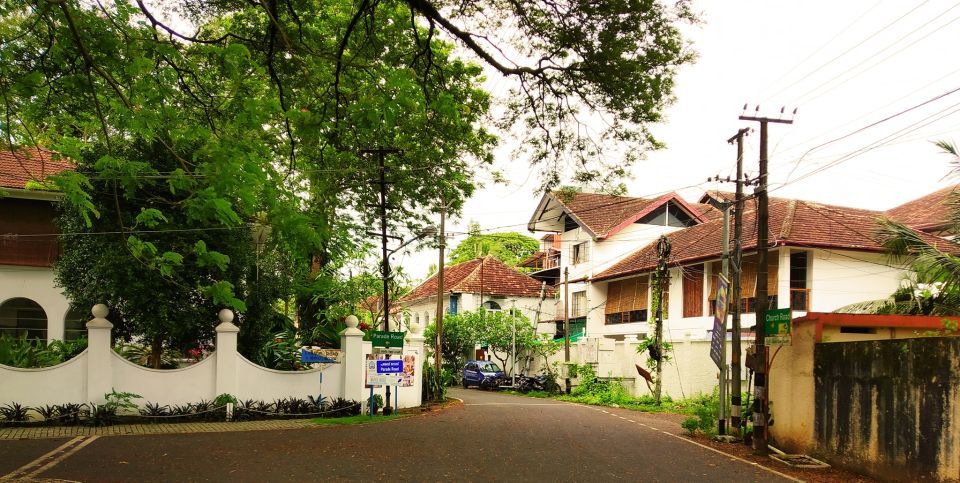
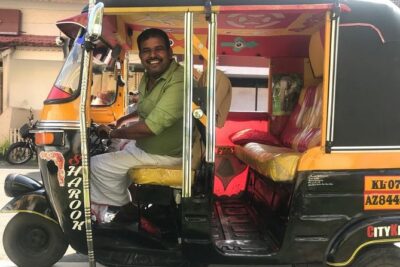
This is built for cruise stops. You’re picked up from Kochi Port Ships Berth and transferred into Fort Kochi for your first look, then the route keeps moving in a practical loop. When your ship day is short, that pacing matters. You won’t spend your time figuring out transport or which side streets matter—you’ll follow a local English-speaking guide from stop to stop in air-conditioned comfort.
The meet-up is also designed to be easy: be at the ship’s berth about 10 minutes early, and your guide will be waiting holding a sign with the local partner’s name on it. Since the tour departure matches your selected time, I’d treat this like a practical appointment, not a casual stroll. In hot weather, a few minutes can change how you feel by the time you hit outdoor areas.
This is not a long, slow city tour. There’s a small amount of walking, so bring comfortable shoes. If you need mobility support or have difficulty with steps/uneven ground, it’s not suitable based on the tour’s standard setup.
You can also read our reviews of more tours and experiences in Kochi.
Chinese Fishing Nets and Dhobi Khana: see work, not just monuments
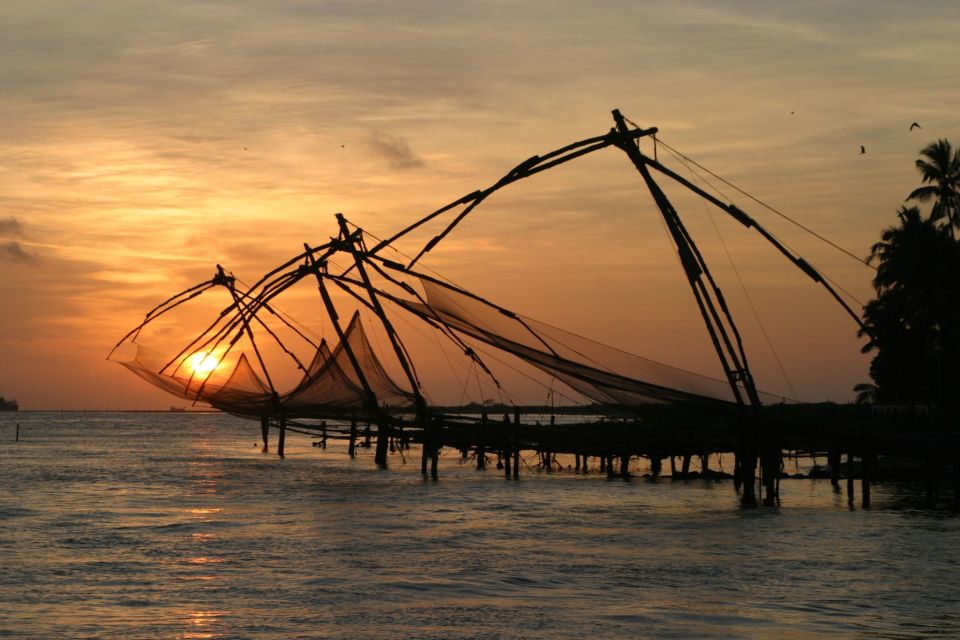
Your first highlight is the Chinese Fishing Nets—iconic, yes, but also meaningful because they’re still used by local fishermen. The nets were introduced by traders from the court of Kublai Khan in the 14th century, and in Kochi you’ll see that tradition working in real time. It’s one of those rare sights where history isn’t frozen behind a fence. You’re watching daily labor that still supports families.
What I like about this opening is that it gives you a baseline for how Kochi earns money: sea, trade, and crafts. You’ll understand later stops faster once you’ve seen that the city’s old connections weren’t just European arrivals—they were part of a wider trading world.
After that comes Dhobi Khana, a local laundry stop. This isn’t a museum. It’s more like a window into everyday life, where you notice how people keep their clothes clean in an environment that has to make the most of local systems. If you’re the type who likes cities for how they function, this is a good change of pace from church doors and palace murals.
One practical consideration: the walk through older parts of Kochi can feel untidy in places. That isn’t a deal-breaker—it’s part of the lived-in reality you came for. Just keep your eyes up for where you’re stepping, and you’ll enjoy the contrast between working street scenes and the polished interiors of later stops.
St Francis Church and Santa Cruz Basilica: Portuguese faith in white stone
Next you’ll hit the Portuguese-era sacred sites—first St Francis Church, then Santa Cruz Basilica.
St Francis Church is the oldest European church in India. It was constructed in 1503 by Portuguese friars, and it’s especially memorable because it’s the burial place of Vasco da Gama, the Portuguese explorer linked to the first ships traveling directly from Europe to India. Even if you don’t chase every plaque, the burial connection gives the building a gravity that feels bigger than its neighborhood.
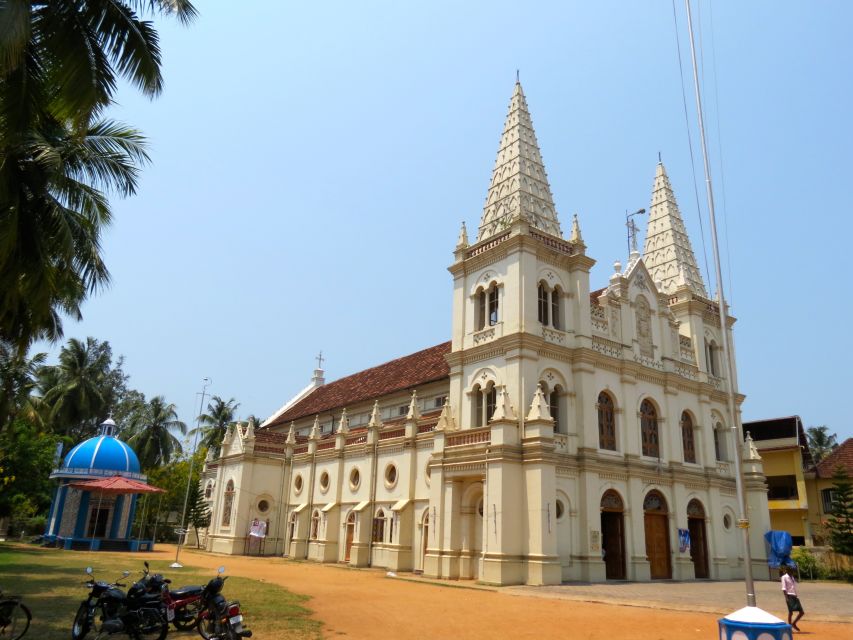
Then you move to Santa Cruz Basilica, one of the largest and most impressive churches in India. The exterior is bright and white-washed, with two soaring spires that show up from a distance. Inside, it shifts into art-and-story mode: walls with frescoes, murals, and large paintings depicting scenes from the life of Jesus Christ.
Here’s what I’d watch for if you want more than a quick photo stop: look for how the paintings guide your eye across the space. These churches aren’t built for speed. If you take a little time inside, the scale and the artwork land better—especially on a port day when you might otherwise feel rushed.
Tip for planning: dress code is strict at places of worship. No shorts or sleeveless tops, and both men and women must have their shoulders and knees covered. If you’re traveling light, it’s worth carrying a light layer you can pull on quickly.
Mattancherry Palace murals and Paradesi Synagogue details
This is where the tour turns from church architecture to layered cultural storytelling.
First stop: Mattancherry Palace. Built by the Portuguese and presented to the Raja of Kochi in 1555, the palace is famous for murals portraying Hindu tales—especially scenes from the Ramayana and Mahabharata. This matters because it shows how Portuguese influence in Kochi didn’t erase local culture. Instead, it sits alongside it, visually and historically, through the art on the walls.
If you’re art-minded, this is a strong use of your time. Those epics are part of the local cultural language, and the palace murals help you recognize why Kochi was such an important trade-and-interaction hub.
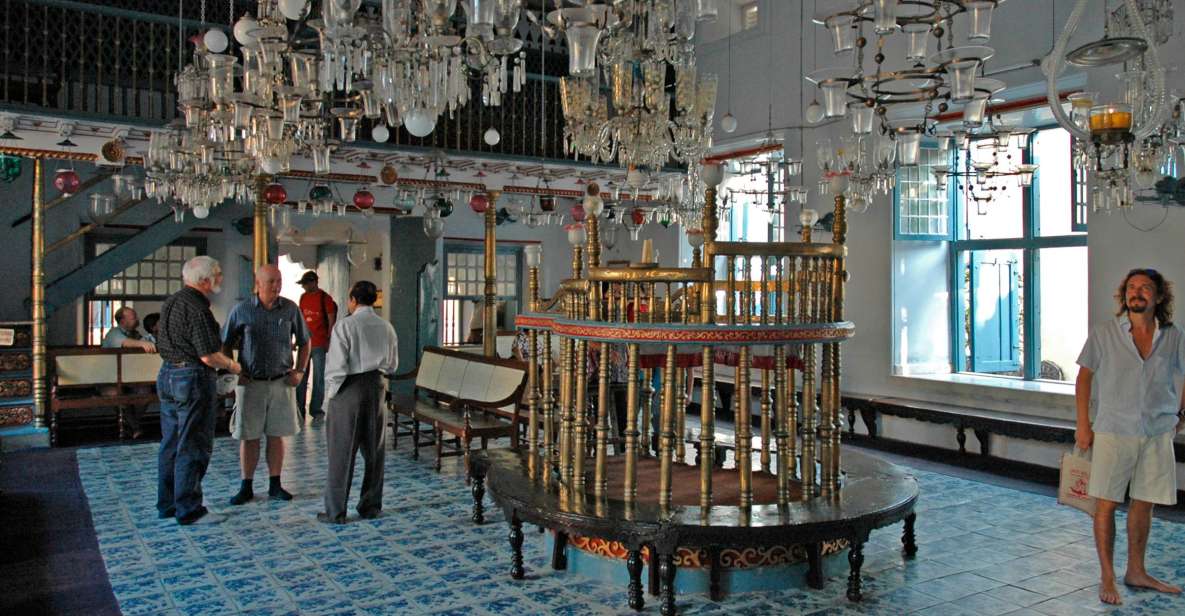
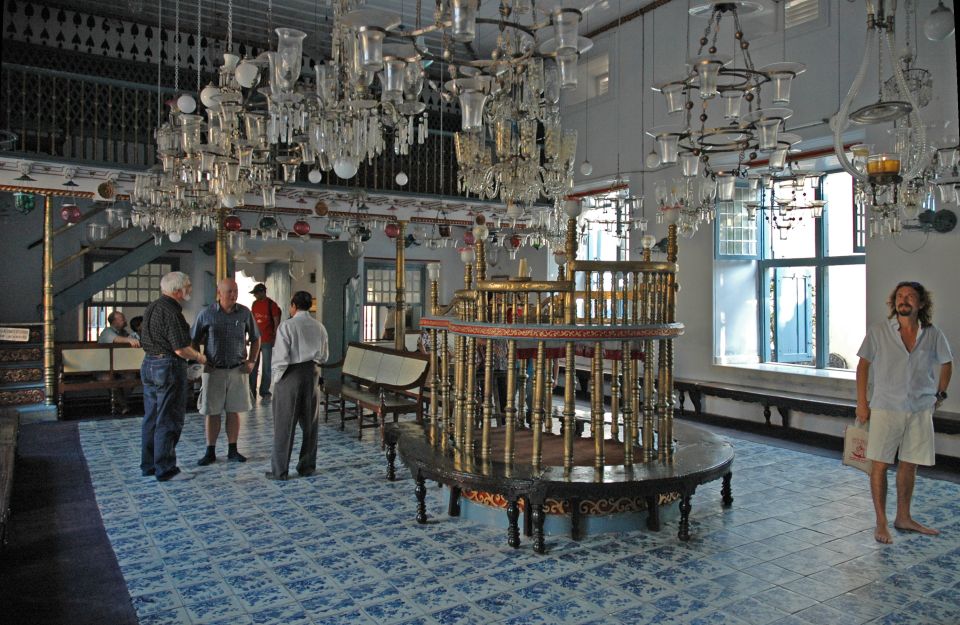
Next door is one of the most distinctive stops on the route: Paradesi Synagogue (also known as the Dutch Palace synagogue area). It’s the oldest active synagogue in South India. The stand-out details are the interior objects and materials: an ornate brass pulpit, a Belgian glass chandelier, and hand-painted Chinese porcelain floor tiles.
This is an excellent counterpoint to the churches earlier in the tour. Same general era of European contact, different faith traditions, and totally different design choices. I like that you get both within walking distance, because it helps you see Kochi as a meeting point rather than a single-style city.
One scheduling heads-up: the Jewish Synagogue / Dutch Palace portion closes on Fridays, Saturdays, Jewish Holidays, and Jewish Passover days. If your cruise lands on one of those days, you should be ready for that change in what you can see.
Jew Town and spice streets: short time, smart shopping
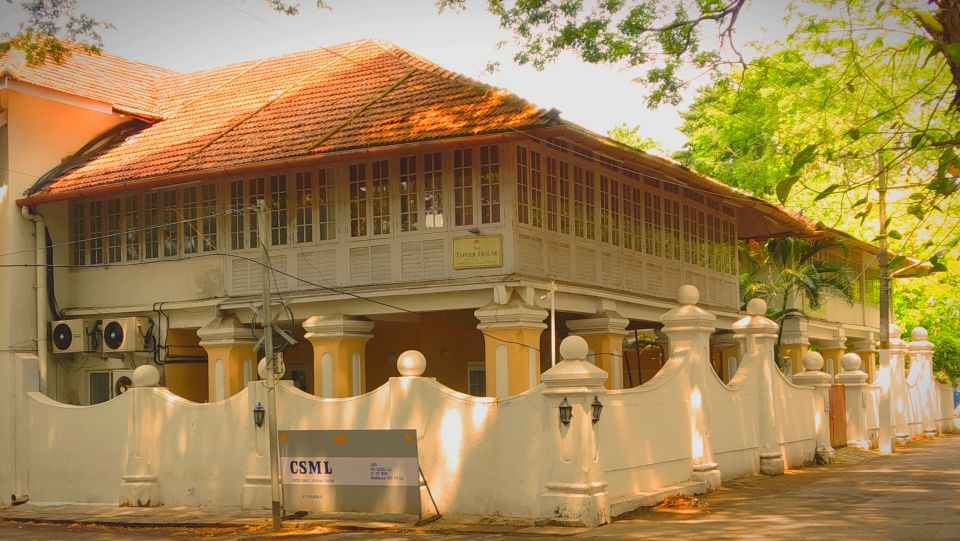
After the palace and synagogue area, you’ll have time in Jew Town. This is a practical finale: it’s close to spice-trade roots, and the air carries that familiar mix—ginger, cardamom, turmeric, and cloves. You’ll likely notice the scents right away when you’re walking the lanes.
What makes Jew Town valuable on a cruise stop is that it’s both cultural and useful. You can browse for spices, handicrafts, and antiques if your schedule allows. If you’re hungry, the tour can also leave room for a casual lunch, depending on timing.
I’d treat this portion like a focused browsing sprint:
- Buy what you can smell and recognize (spices are best when you can verify the aroma).
- Keep an eye on packing. Glass bottles and delicate antiques can be tricky on a short trip.
- If you’re picky about quality, ask your guide where to look within the time you have.
This is also a good moment for context. After churches, murals, and synagogue details, the spice streets feel less random. They connect to the idea of trade routes, not just European arrival stories.

Price, pacing, and comfort tips for a 4-hour port day
At $27 per person for a 4-hour tour, the value comes from what’s included and what’s saved. You get port pickup and drop-off, bottled water, a driver and guide, and transport in an air-conditioned vehicle. In port time, that matters: it’s not just sightseeing, it’s efficiency.
The route hits major landmarks without making you sort logistics. That’s the kind of “value” that doesn’t show up in a basic price tag. You also aren’t stuck with only one type of stop. You get working life (Chinese nets, laundry), major Portuguese churches, a palace of murals, and an interior-rich synagogue—then you finish in a shopping-friendly neighborhood.
A few things to plan so the day feels pleasant rather than frantic:
- Wear shoes you can walk in. Even if the walking is limited, older lanes can be uneven.
- Dress for worship. A cover-up is the easiest fix if you’re in shorts and tank tops.
- Bring a light layer for church interiors and transport. They can feel cooler than outside, especially in air-conditioned cars.
- Since snacks and drinks (and lunch) aren’t included, budget for small purchases if you get snacky. Bottled water is included, which helps.
Finally, note that there is an option for a private group. If you’re traveling with family or want slower pacing for shopping and photos, private can make the experience feel less compressed.
Should you book this Cochin Port tour?
I’d book this tour if you want a structured, high-return port-day overview that actually connects the dots: trade and work (fishing nets, laundry), Portuguese-era landmarks (St Francis, Santa Cruz Basilica), and then the palace-and-synagogue contrast in Mattancherry. It’s also a strong fit if you enjoy religious art and interior details more than just exterior sightseeing.
Skip it only if the dress code is a deal-breaker, you can’t handle some walking, or your dates fall on the closure days for the Jewish Synagogue/Dutch Palace portion. Otherwise, this is a compact, well-paced way to understand Kochi’s past and present without wasting your cruise stop.
FAQ
How long is the Cochin Port group tour?
It runs for 4 hours.
Where do I meet the tour?
The meeting point may vary depending on the option booked, but you’ll meet at your selected ship berth area. Your guide will wait with a sign.
What’s included in the price?
Port pickup and drop-off, bottled water, a driver and local English-speaking guide, and air-conditioned vehicle transport.
Is lunch included?
No. Snacks and drinks are also not included, and lunch is not provided.
What should I wear for churches and museums?
No shorts or sleeveless tops. Both men and women must have shoulders and knees covered. You can be refused entry if you don’t meet the dress code.
Is there a lot of walking?
There is a small amount of walking, so comfortable walking shoes are recommended.
When is the Jewish Synagogue or Dutch Palace closed?
It’s closed on Fridays, Saturdays, Jewish Holidays, and Jewish Passover days.
Is this tour suitable for people with mobility impairments?
No, it is not suitable for people with mobility impairments.
What’s the cancellation policy?
You can cancel up to 24 hours in advance for a full refund.