REVIEW · KOCHI
Kochi: Kathakali Evening Dance Show w/ Dinner & Transfer
Book on GetYourGuide →Operated by INDIATOR · Bookable on GetYourGuide
A face paints the story before words ever do. I love Kathakali for how it tells a whole story through facial expressions, hand signs, and rhythm. I also like the hotel transfer plus an included local dinner, which makes the evening feel effortless from start to finish. The main drawback: the show runs long enough that if you only want a quick cultural hit, you may find it hard to stay fully engaged, and dinner quality can be hit-or-miss for different tastes.
This is built for comfort and understanding. You ride in a private air-conditioned car with an English driver, and you get an English audio guide to help you follow what’s happening on stage. It’s a small group (up to 8), so you’re not lost in a crowd, and you can actually focus on the performance details.
In This Review
- Key things I’d circle before you go
- Why Kathakali belongs in Kochi (and not just on paper)
- Getting to the center: transfers that keep the evening easy
- The practical comfort stuff
- The performance flow: Kelikutto to Tiranokku in plain terms
- Kelikutto: attention gets pulled forward
- Todayam: blessing in character form
- Purapaddu: an entertaining dance piece
- Melappada: music takes the stage
- Tiranokku: the scene starts being narrated
- What makes it memorable: faces, gestures, and music
- Dinner after the show: included, local, and worth planning around
- Seats, timing, and the makeup moment you’ll regret missing
- What to bring (small but important)
- Price and value: does $60 make sense for what you get?
- Who should book this, and who should skip it
- Should you book? My honest call
- FAQ
- FAQ
- What’s the duration of the Kochi Kathakali evening show with dinner and transfer?
- Where is pickup and drop-off?
- Is the show ticket included?
- Is dinner included, and is it a fixed menu?
- Is an audio guide included?
- How big is the group?
- What time does the activity start at the center?
- Are luggage or large bags allowed?
- What should I wear or bring?
- What’s included in the transfer?
Key things I’d circle before you go
- Arrive early for makeup and seats: you’ll get the best view when you show up ahead of time.
- Storytelling without dialogue: Kathakali communicates through gestures and facial expression, so you don’t need spoken-language skills.
- The show is staged in distinct sections: Kelikutto, Todayam, Purapaddu, Melappada, and Tiranokku each play a role.
- Music takes center stage: Melappada brings the musicians forward for a big emotional lift.
- Dinner is fixed-menu local food: it’s part of the value, but it depends on what you like.
- No big luggage: plan to travel light for the center entrance.
Why Kathakali belongs in Kochi (and not just on paper)
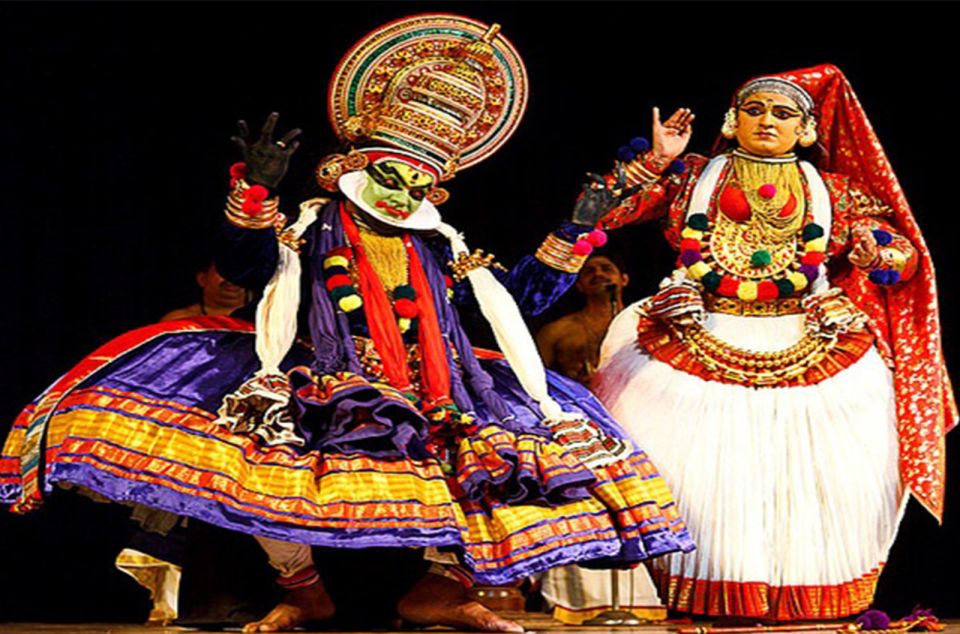
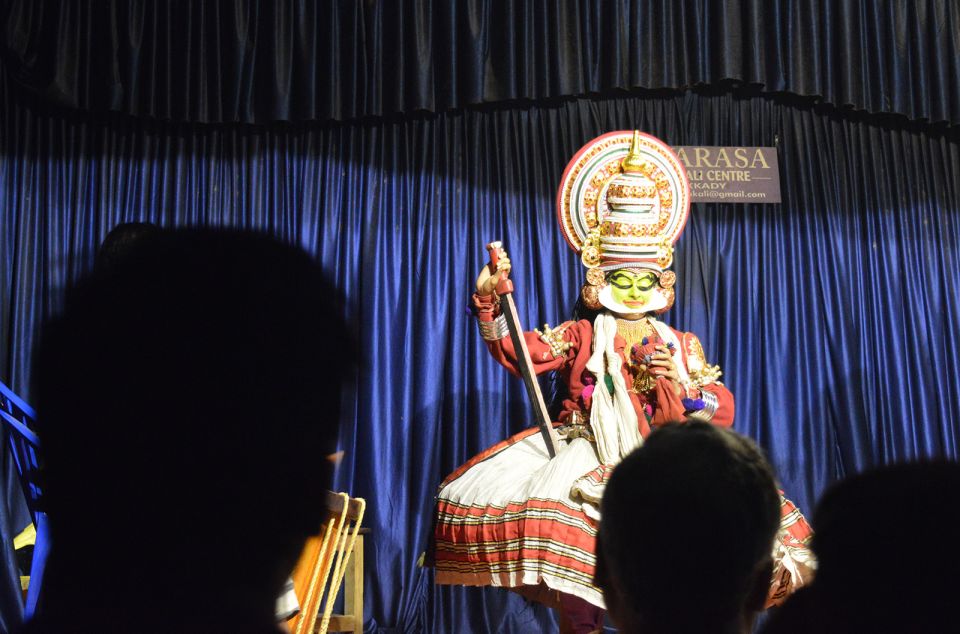
Kathakali is one of those Kerala art forms that can look intimidating from a distance. Big costumes. Heavy makeup. Weird-looking faces. Loud drumming. If you’ve ever worried that you’ll sit there feeling confused, this show helps. Kathakali is designed to be read visually.
The big win here is how the performance moves the story along without relying on dialogue. When the actors switch expressions—eyes, eyebrows, mouth shapes—you suddenly understand the mood shift. The gestures do the rest. It’s theatre that speaks through movement.
I also like that you’re not just watching dancers. You’re watching a full ritual of stagecraft: attention gets called (Kelikutto), characters appear with meaning (Todayam), and the performance builds through music and dance into narrated scenes. Even if you only catch part of the flow at first, the rhythm and clarity of the staging pull you in.
The second reason I rate this experience highly: you get culture plus logistics handled. Instead of figuring out schedules, transport, and where to eat, you get the show and dinner in one neat package.
You can also read our reviews of more tours and experiences in Kochi
Getting to the center: transfers that keep the evening easy
Pickup is from any Cochin/Ernakulam hotel. A driver reports to the hotel lobby and then takes you to the show area, and you’re dropped back after dinner. You’re in a private air-conditioned car, and the package includes parking and tolls. That matters more than you’d think in Kochi, where timing and traffic can mess with a tight evening plan.
One detail to know: this runs during the evening window of 18:30 to 19:30 at the center. So your day should be calm. If you’re trying to cram last-minute shopping or a long dinner on your own beforehand, you’ll feel rushed.
Also, a real-world heads-up: if you’re using a cruise terminal pickup (one reviewer mentioned Enukalam), you may need to pay an extra pickup charge. That doesn’t mean it’s required for everyone, but it’s a good thing to confirm early if your schedule starts at the pier.
The practical comfort stuff
- You’ll have an English-speaking driver.
- Your group stays small, so the ride doesn’t turn into a stop-and-drop marathon.
- You’ll want comfortable shoes. The center experience can involve standing and waiting.
- Large bags or luggage aren’t allowed, so plan to travel light.
The performance flow: Kelikutto to Tiranokku in plain terms
Kathakali shows have an internal logic. If you can follow the sections, you’ll enjoy it more. Here’s what to expect, in the order the performance usually unfolds.
Kelikutto: attention gets pulled forward
The act starts with Kelikutto—basically a call for the audience to shift focus because the performance is about to begin. Think of it as the show’s way of switching your brain from casual watching to full attention.
This is more than formality. If you’re fidgeting during this part, you’ll miss the first rhythm cues that help you track what’s coming next.






Todayam: blessing in character form
Next is Todayam. In this section, two allotted characters evoke blessing of the divine. This is where you’ll start seeing how character roles are encoded visually—costumes, facial paint, and body language all work together.
It’s also a good time to use the English audio guide if you have one. You don’t need a perfect translation. Just listening for what role each character is playing will make the rest of the show click faster.
Purapaddu: an entertaining dance piece
Purapaddu comes next. This is the part meant to feel more playful and entertaining. You’ll likely notice more dance movement and audience energy picks up here.
If you’ve had a long day, this section can help you reset. The performance is building toward deeper narrative later, but Purapaddu gives you something lively first.
Melappada: music takes the stage
Then comes Melappada, where the musicians take center stage and bring you through a musical journey that builds intensity. This is a big deal because it’s not only the actors doing the work. The live music drives pacing and emotion.
If you like sound as much as visuals, this is where you’ll feel it most. The drumming and tempo changes help you understand when a scene is turning, even if you don’t know the plot.
Tiranokku: the scene starts being narrated
After the earlier sections, the performance includes Tiranokku—this marks the beginning of a scene to be narrated. Other characters get their debut here, and the show starts communicating the storyline more clearly.
One small technical note from the show’s structure: the Pakka and Minukku roles won’t have an opportunity to do a debut in the way some other characters do. You don’t need to memorize names, but it helps explain why the cast rollout feels structured rather than random.
What makes it memorable: faces, gestures, and music
Kathakali can look like it’s all costume at first. But once the story starts moving, you realize the costume is just the frame. The real language is in the face and hands.
I love the way Kathakali uses facial expression to mark emotion instantly. It’s dramatic, but not in a cartoon way. It’s precise. One actor’s eyes can feel like a spotlight changing direction.
Hand gestures also do heavy lifting. Even without spoken dialogue, you can follow meaning because the show is built for visual clarity. The performance style also means you’re not stuck translating. If you prefer theatre you can understand without language, this works well.
A bonus: audience participation is part of the experience. That can make it feel less like a formal lecture and more like a shared event. It also gives you permission to relax and enjoy rather than worrying about missing plot points.
And if you’ve heard comparisons to Japanese Noh theatre, there’s a reason. Both styles rely on gesture and expressive performance rather than dialogue. The Kathakali version is more colorful and louder, but the core idea—story told through performance codes—is similar.
Dinner after the show: included, local, and worth planning around
This experience includes a fixed-menu dinner at a local restaurant after the performance. The evening is structured so you’re taken back for dinner and then dropped back to the hotel.
Here’s what to know so dinner doesn’t surprise you:
- It’s included as a set menu. That’s great for value and planning, but it also means you can’t always choose what you crave.
- The food is local. In some runs, vegetarian options have been praised, and one review specifically called out strong vegetarian food.
- Service quality can vary by restaurant and staff that night. One reviewer mentioned service from Raju at the Pavilion Restaurant.
Is the dinner the main event? For some people, yes—especially if they want a proper Kerala meal after theatre. For others, the dinner can feel average if they’re expecting a more upscale experience.
So here’s my practical take: treat dinner as part of the cultural package, not as the reason you booked. If you’re very food-picky, be ready for a fixed-menu setup.
One more note: the highlights mention lunch, but the experience you’ll reliably get during the 3-hour window is the included dinner after the show. Don’t plan on a separate lunch unless you confirm it with the operator.
Seats, timing, and the makeup moment you’ll regret missing
You’ll enjoy this show more if you show up early.
In particular, make-up time matters. One review advised arriving about an hour in advance so you can watch performers put on their makeup. That’s not just a cute extra. It helps you understand what you’re seeing on stage, because you’ll see how character identity is created step-by-step.
Arriving early also improves your seating. If you wait until the last minute, you might end up with a view that’s less satisfying for watching faces and upper-body movement—exactly what Kathakali is best at.
What to bring (small but important)
Wear comfortable shoes. You may stand while waiting. You can’t bring luggage or large bags, so if you’re carrying a daypack, keep it manageable.
Price and value: does $60 make sense for what you get?
At $60 per person for about 3 hours, you’re paying for more than a ticket. This price bundles:
- Private air-conditioned transport with parking and tolls
- Meet-and-greet assistance
- Kathakali show ticket
- Fixed-menu local dinner
- Service fee and taxes
- English audio guide
- Small group size (up to 8)
If you were to price those parts separately—especially transport plus dinner—it starts to feel more reasonable. The show ticket alone might be cheaper elsewhere, but you’d still have to solve transport and meal timing on your own. For many people, the convenience is the value.
That said, there’s a clear caution sign: one review complained that the price felt high compared to included services and found the dinner mediocre. Another person felt the show was too long.
So the math depends on your taste and attention span:
- If you want a guided evening that ties together show + food + transport, this price can feel fair.
- If you mainly want a quick, fast-paced entertainment stop, you may not feel the value.
Who should book this, and who should skip it
This tour-style evening is a great fit if you:
- Want Kerala culture without needing language skills
- Prefer a small group and a clear plan
- Like live music and performance theatre
- Appreciate a full evening flow with dinner included
It may not be the best fit if you:
- Get bored by long performances
- Expect a dinner that rivals a best-in-class restaurant
- Need maximum flexibility in food choice (fixed menu means less control)
- Plan to travel with large luggage
If your idea of a perfect night is short and spontaneous, consider other options. If your idea of a perfect night is discovering how Kerala tells stories with movement, this is the kind of evening you’ll remember.
Should you book? My honest call
I’d book this if you want one organized evening in Kochi that focuses on a real local art form and doesn’t drain your energy figuring out logistics. The small-group setup, English audio support, and the way the show unfolds in clear sections make it easier to follow than a lot of cultural performances.
But go in with the right expectation: this is not a 45-minute sampler. It’s a structured performance with music-driven pacing. If you’re sensitive to performance length, or if you judge value mainly on dinner quality, you might feel differently.
If you do book, arrive early. Even if you think you can’t spare the time, make it work. The makeup and seating window can turn a good show into a great one.
FAQ
FAQ
What’s the duration of the Kochi Kathakali evening show with dinner and transfer?
It runs for 3 hours.
Where is pickup and drop-off?
Pickup and drop-off are from any Cochin or Ernakulam hotels. The driver meets you in the hotel lobby.
Is the show ticket included?
Yes, your Kathakali show ticket is included.
Is dinner included, and is it a fixed menu?
Yes. Dinner is included as a fixed menu at a local restaurant.
Is an audio guide included?
Yes. An English audio guide is included.
How big is the group?
The group is limited to 8 participants.
What time does the activity start at the center?
The know before you go window is 18:30 to 19:30 at the center.
Are luggage or large bags allowed?
No. Luggage or large bags are not allowed.
What should I wear or bring?
Bring comfortable shoes.
What’s included in the transfer?
You get transport by private air-conditioned car with all parking and toll tax. Service fee and taxes are also included.