REVIEW · KOCHI
Kochi: Kathakali, Theyyam, and Kalaripayattu Evening Show
Book on GetYourGuide →Operated by Trip Buggy · Bookable on GetYourGuide
One night, three Kerala art forms, all intensity. I love the Kathakali makeup transformation and the way the face tells the story, and I also love the Theyyam ritual energy that feels almost spiritual from the first drumbeat. One key drawback to note: wheelchair users can’t join.
This is a practical, well-paced cultural evening built around your time in Kochi or Ernakulam. You’ll get round-trip hotel transfers, English guidance, and a show sequence that moves from theatre storytelling to martial arts to a ritual dance that looks and feels otherworldly.
The best part is that you’re not just watching. You’re learning how each tradition works, then getting a chance to interact and take photos after the performances.
In This Review
- Key Points Worth Your Evening
- A Kerala Cultural Evening Built Like a Story
- Hotel Pickup in Kochi or Ernakulam: Smooth Start, Less Hassle
- The Kathakali Section: Makeup, Meaning, and Mahabharata-Style Drama
- Kalaripayattu (Kalari): Martial Art Speed You Can Actually See
- Theyyam: Ritual Dance with a Sacred-Feeling Presence
- What Photography and Noise Mean for Your Experience
- Timing, Comfort, and Getting the Most Out of Your Seats
- Price and Value: Why This Often Feels Like a Bargain at About $11
- Who This Show Fits Best (and Who Might Want Another Option)
- Should You Book This Kochi Kathakali, Kalaripayattu, and Theyyam Evening?
- FAQ
- How long is the show?
- Where does hotel pickup happen?
- Is there an English guide?
- Will I be able to take photos?
- What art forms are included?
- Is the show available every day?
- What should I wear?
- Is it suitable for wheelchair users?
Key Points Worth Your Evening
- Kathakali makeup as character design: natural pigments and facial painting that turn a performer into an epic figure
- Mudras, navarasas, and live music: you’ll learn what you’re seeing before the full story hits
- Kalaripayattu weapon and acrobatics: speed, strength, and control in a single high-energy segment
- Theyyam’s trance-like stage presence: drumbeats and chants support a deity embodiment feel
- Hotel transfers and English explanations: less logistics, more focus on the art itself
- Flash-free photography rules: you can photograph, but you’ll need to skip the flash
A Kerala Cultural Evening Built Like a Story
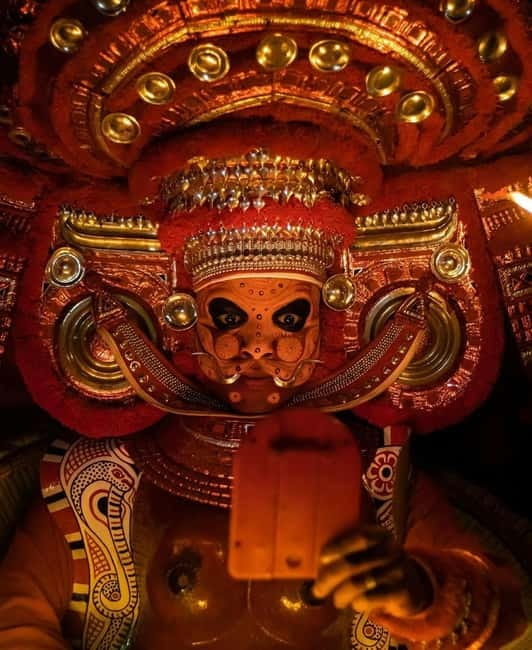
If you’re only in Kerala for a short time, this kind of evening show makes sense. Instead of hopping between separate tickets and far-flung venues, you get a single program that covers three iconic traditions: Kathakali, Kalaripayattu (Kalari), and Theyyam.
What makes it especially interesting is the range. Kathakali is theatre storytelling through expression and gesture. Kalaripayattu is disciplined combat skill, including weapon mastery and acrobatic movement. Theyyam is ritual dance performance where the performer appears to embody a deity presence. Put together, the evening shows how Kerala art can be both dramatic and physical, sacred and performative.
You can also read our reviews of more evening experiences in Kochi


Hotel Pickup in Kochi or Ernakulam: Smooth Start, Less Hassle
Your evening starts with round-trip transfers from your hotel in Kochi or Ernakulam, depending on the option you select. You ride in an air-conditioned vehicle, which matters when the city heat wants to stick to you.
Once at the venue, you follow the flow of the show without worrying about tickets or finding the right entrance. There’s also a skip-the-ticket-line setup, so you can get seated and settle in before the first segment starts. You’ll also have a driver waiting at the end, so you’re not left trying to solve transport right after the final performance.
Two practical notes I’d keep in mind:
- The overall duration is listed broadly (up to 7 hours), but the showcase itself is about 3 hours. Plan for some waiting and a travel buffer.
- If you’re staying in Kochi vs Ernakulam, the pickup spot changes. Confirm what area you’re actually being collected from so you’re not standing there like a confused extra.
The Kathakali Section: Makeup, Meaning, and Mahabharata-Style Drama
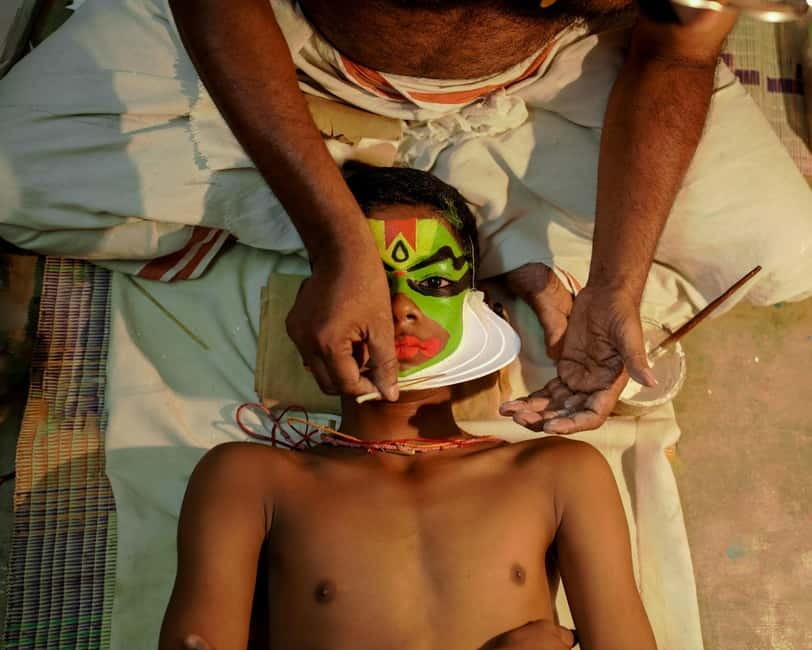
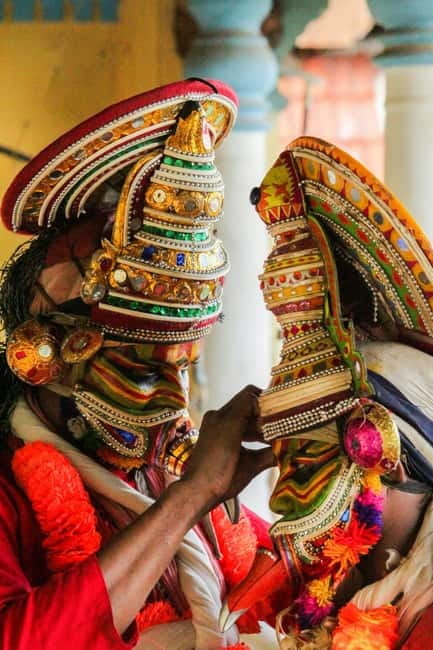
Kathakali is the star performer’s workshop first, spectacle second. The program begins with a Kathakali makeup demonstration, where you can see the transformation step by step. You’ll notice the care in the facial painting and how natural pigments are used to build character marks. It’s not just decoration. It’s part of the language of the performance.
After that, the full Kathakali performance unfolds under the glow of traditional oil lamps. That lighting choice isn’t random. It supports the mood and helps the performers’ faces read clearly as the drama builds. Kathakali stories often draw on epic themes, and in this show you’ll be hearing dramatic narratives connected to ancient Indian epics such as the Mahabharata and Ramayana.
Here’s what’s really valuable for you as a viewer: you don’t have to guess what’s happening. English-language guidance helps translate the key elements of what you’re seeing, including:
- Mudras, the expressive hand gestures that punctuate meaning
- Exaggerated facial expressions tied to emotional states (often described through the navarasas idea)
- Stylized movement and character-driven acting supported by live voices and percussion
If you’ve never watched Kathakali before, pay attention to the eyes and eyebrows. The theatre style relies heavily on facial communication, and once you spot the pattern, the whole story clicks faster.
Kalaripayattu (Kalari): Martial Art Speed You Can Actually See
Next comes Kalaripayattu, also called Kalari. This is the segment where the evening shifts from storytelling theatre into pure physical skill. The art is known as the mother of all martial arts, and the show aims to prove that with controlled power rather than chaos.
In the live Kalari display, trained performers demonstrate:
- ancient combat techniques
- weapon mastery
- agility and acrobatic movements
The key is precision. Even when the choreography looks fast and fearless, it’s built on years of practice. You’ll likely feel the contrast between stage character acting (Kathakali) and real training discipline (Kalaripayattu). They scratch different itches, and that’s a big part of why the program works as a bundle.
Also, if you have even a small interest in martial arts history or technique, you’ll get more out of this than just watching for spectacle. The format is designed to show the core movement vocabulary and how weapons are handled within the tradition.
Theyyam: Ritual Dance with a Sacred-Feeling Presence
Then the program moves into Theyyam, a ritualistic dance form that originates in North Kerala. On a stage, it becomes performance for cultural appreciation, but it keeps the ritual vibe: elaborate headgear, dramatic makeup, and vibrant costumes that make the performer look transformed before your eyes.
Theyyam is often described as the dance of the gods. The show leans into that idea by using hypnotic drumbeats and ritual chants to push you toward a trance-like atmosphere. The performer’s movements can look deliberate, piercing, and intensely present, as if the character isn’t acting so much as channeling.
What I like about this part for visitors is the way it feels both surreal and understandable. You’re watching something visually dramatic, but the English guidance helps you follow what’s going on without needing insider background.
Timing can also affect how you experience it. One useful planning clue: makeup and preparation may run around 5–6 pm, followed by performances around 6–8 pm (depending on the day). If your schedule allows, arriving a bit early for the first scenes can help you catch the full energy arc.
You can also read our reviews of more tours and experiences in Kochi
What Photography and Noise Mean for Your Experience
Let’s talk about the rules you’ll actually care about in the moment.
Photography is allowed during the show and interaction time, but flash photography is not permitted. That means:
- use your camera’s normal settings (or phone night modes if needed), and
- keep flash off even if someone else forgets.
The other thing to plan for is sound. The program relies on live percussion, vocalists, drumbeats, and chanting across different segments. You’ll want to be comfortable sitting through loud rhythmic music and strong vocal energy, especially during the Theyyam portion.
If you’re going with kids, it’s still doable. Just be ready for the fact that the show is theatrical and loud in places, and you’ll want to keep breaks in mind if your group gets restless.
Timing, Comfort, and Getting the Most Out of Your Seats
Wear comfortable clothes. You’ll be sitting for a chunk of the evening, and you’ll probably stand or move slightly during the transition between segments and after the performances for photos or interaction.
Because the experience is guided in English and paced as a structured program, your best move is to stay present for the explanations. Don’t treat them as filler. In Kathakali especially, the guidance helps you decode the face, gestures, and emotional shifts quicker, so the story feels less like random theatre and more like readable character drama.
Seating and viewpoint can also matter. If you’re near a side angle, the facial detail may take a moment to register. If you can, pick a spot that gives you a clear line to the performers’ faces and hands during the Kathakali segments.
Price and Value: Why This Often Feels Like a Bargain at About $11
The price is listed at around $11 per person, which is genuinely strong value for what you get: three major Kerala traditions in one evening, plus round-trip hotel transfers, English guidance, and time for interaction after the show.
Here’s how I’d frame the value for your decision:
- If you tried to do these separately, you’d likely pay more for individual tickets and transportation.
- The transfers matter. Kochi and Ernakulam are close, but traffic and timing can turn an evening into a logistical puzzle.
- The English guidance adds value because it reduces the “I’m watching but not understanding” problem that can happen with unfamiliar performance styles.
In short, you’re paying for convenience and context. And the show itself brings high production energy through live music and performers trained for these exact traditions.
Who This Show Fits Best (and Who Might Want Another Option)
This experience is ideal if you want a compact cultural night with real craft behind it. I’d especially recommend it if you:
- enjoy live performance and traditional theatre
- like martial arts displays and controlled action
- want a visual and spiritual-feeling performance that’s visually unlike anything else in India
It’s also a good match for first-timers to Kerala art forms because the guidance helps you interpret what you’re seeing as it happens.
One clear limitation: it’s not suitable for wheelchair users. If mobility is a concern, you’ll need to look for an alternative arrangement that can accommodate your needs.
Should You Book This Kochi Kathakali, Kalaripayattu, and Theyyam Evening?
If you like your travel evenings active and culturally focused, I think you should book this. The combination makes sense: theatre expression, martial discipline, then ritual dance presence. It’s the kind of program that turns a short stay into a story you’ll remember.
Before you go, double-check two things:
- Your pickup area (Kochi vs Ernakulam) so you don’t lose time at the start.
- The photography rule (no flash) so you don’t accidentally break it at the wrong moment.
If you’re the type who wants one tradition in deep focus, you might wish the evening were longer or less packed. But if your goal is to see three Kerala icons in one efficient night with English context and round-trip comfort, this is a smart value play.
FAQ
How long is the show?
The cultural showcase is about 3 hours, but the overall experience duration is listed as 1 to 7 hours depending on the selected starting time and scheduling.
Where does hotel pickup happen?
Pickup is available from hotels in Kochi or Ernakulam, depending on the option you select.
Is there an English guide?
Yes. English-language guidance is provided.
Will I be able to take photos?
Yes, photography is allowed. Flash photography is not permitted.
What art forms are included?
The show includes Kathakali (with a makeup demonstration and performance), Kalaripayattu (Kalari), and Theyyam.
Is the show available every day?
Yes, the tour is available daily.
What should I wear?
Wear comfortable clothes so you can sit comfortably through the performances.
Is it suitable for wheelchair users?
No. The experience is not suitable for wheelchair users.