REVIEW · KOCHI
Port Pick-Up: Kochi Tour with Licensed Guide and Vehicle
Book on Viator →Operated by Japan Guide Agency · Bookable on Viator
Kochi feels personal with the right guide. This private guided tour is built around a simple idea: you pick the sights you care about, then a licensed local guide (with translation) handles the how and why. It runs about 6 hours and starts with pickup by vehicle plus a mobile ticket, so you spend more time looking around and less time figuring things out.
I especially like two things: the customizable stop list (castle, temple, manga museum, shopping streets, markets, cave) and the fact that your guide keeps the story flowing in plain language. The one real consideration is physical effort: Kochi Castle involves a noticeable uphill climb and stairs, so plan for that.
In This Review
- Key highlights that make this tour worth your time
- Why this Kochi tour beats a fixed itinerary
- How the 6-hour private van day feels (and what to expect)
- Choosing your 3–4 stops: how to build a satisfying Kochi day
- Kochi Castle and the Castle Museum of History
- Makino Botanical Garden: a calm reset from the city
- Chikurinji Temple: pilgrimage energy and academic prayers
- Yokoyama Memorial Manga Museum: modern culture with real meaning
- Shopping streets in Kochi: Obiyamachi and Harimayabashi
- Hirome Ichiba: where the day turns into food and people-watching
- Sunday Market and Katsurahama Ryuogu Shrine: local rhythm when the timing lines up
- Ryugado Cave: the one-hour wow factor under the rock
- Price and value: is $570.69 per group a smart spend?
- Who should book this Kochi private tour
- FAQ
- FAQ
- How long is the Kochi tour?
- How many people is the group limited to?
- Is pickup included?
- What does the tour include?
- Are entrance fees included?
- Is lunch included?
- Can I choose which sights I visit?
- Does the guide translate for you?
- Are service animals allowed?
- Can I cancel for a refund?
- Should you book this Kochi private tour?
Key highlights that make this tour worth your time
- Pick your sights in advance: You choose a small set of stops from the provided list, which keeps the day focused.
- Licensed local guide with translation: Explanations come with context, and language barriers are handled for you.
- A private vehicle for a smooth route: You’re not hopping between public transport lines with a deadline.
- Food and local shopping baked in: Hirome Ichiba and nearby shopping streets make the day feel like Kochi, not just sightseeing.
- Kochi Castle + history museum are a strong start: You get both the landmark and the deeper background.
- One big nature or underground option: Ryugado Cave gives you that dramatic change of pace.
Why this Kochi tour beats a fixed itinerary
A fixed itinerary is fine when you want the standard highlights in the standard order. But Kochi rewards a slightly different mindset: you want to pick between history, temples, markets, shopping streets, and nature without burning time on stops you don’t care about.
That’s exactly what this tour is built for. Before you go, you select a short set of sights from the list, so the guide can shape the day around your interests rather than marching everyone through the same checklist. If you’re the type who wants history first, you can start with Kochi Castle and keep going. If you’d rather prioritize food and atmosphere, you can build a route around the markets and shopping streets.
The other big win is communication. A guide with translation means you’ll actually understand what you’re looking at—castle design, temple connections to the Shikoku pilgrimage, why certain foods and stalls matter at the markets. I’ve seen guides in this program praised for being fun and going beyond basic facts, including pointing out snacks and practical ways to order or choose.
You can also read our reviews of more guided tours in Kochi


How the 6-hour private van day feels (and what to expect)
With a private vehicle and a group limited to up to 2 people, this has the tempo of a day trip with a plan, not a group bus shuffle. Pickup is offered, and the operator provides a mobile ticket, so you’re not relying on paper confirmations at every step.
In a perfect world, 6 hours sounds like plenty of time. In real Japan pacing, it’s enough for 3–4 stops without rushing—especially when your guide is also driving, timing museum entries, and translating on the move. The tour is designed around that constraint, and your stop selection matters. Pick one heavy-hitter like Ryugado Cave or Kochi Castle plus a market stop, and you’ll feel like the day has rhythm rather than panic.
Choosing your 3–4 stops: how to build a satisfying Kochi day
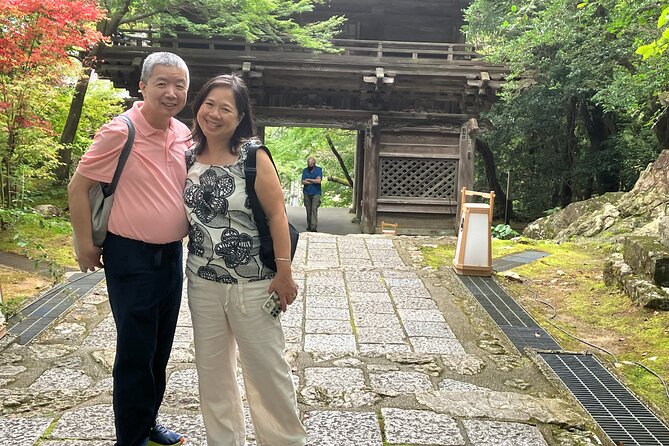
Your options come from a list of sights, and the tour is structured to keep you to a small number of stops. Here’s how I’d think about selection so you don’t end up with a day that feels “busy” instead of “good.”
If you want classic Kochi:
- Kochi Castle + Kochi Castle Museum of History as your foundation
- Add either Hirome Ichiba (food/izakaya energy) or a shopping street stop nearby
If you want culture with a twist:
- Chikurinji Temple for the pilgrimage link and academic prayers theme
- Add Yokoyama Memorial Manga Museum for a very modern contrast
If you want markets and everyday life:
- Sunday Market (weekend timing matters) + Hirome Ichiba
- Add one shopping street stop to make the walking feel local, not tourist-only
If you want a nature or underground highlight:
- Pair Ryugado Cave with Hirome Ichiba
- Or go castle + cave if you want one “big landmark” and one “big wow”
One caution: the included list contains places with different physical demands. Kochi Castle involves walking uphill and stairs. Ryugado Cave is an hour-long commitment. If you’re sensitive to walking time, choose fewer big-effort stops.
Kochi Castle and the Castle Museum of History

Kochi Castle is one of the few original castles that survived both the Edo and Meiji eras when many castles were destroyed. That matters because you’re not just looking at a replica vibe—you’re looking at a rare survivor that helps explain how the region’s power and design persisted through huge periods of change.
Plan for more than a quick photo. The route up to the castle has an uphill climb, and once you’re there, stairs are part of the experience. If you’re doing this with kids, anyone with mobility limits, or someone who hates stairs, you’ll want to pace carefully or consider choosing fewer other stops that day.
The Castle Museum of History is also a smart add-on. Instead of trying to tell the whole story through castle walls alone, it focuses on the castle’s history and the broader Tosa kingdom background. This is where you’ll usually get the “how did we get here?” context that makes the fortress feel less like a stand-alone landmark and more like part of a larger story.
A couple of guides in this program have been praised for arranging thoughtful extras around the castle area, including a tea ceremony connection. That’s not listed as a standard inclusion, so if tea is important to you, ask during planning so expectations are clear.
Makino Botanical Garden: a calm reset from the city
The Makino Botanical Garden is a quieter choice that still feels meaningful. It was created to honor Makino Tomitaro, often called the father of Japanese botany. So even if you’re not a plant nerd, you’re in a place with a purpose, and your guide can connect the garden to the bigger story of Japanese botanical study.
This stop works well as a “breather” between heavier sightseeing. Kochi Castle has stairs and views. A temple can involve quiet walking on a different kind of terrain. The botanical garden gives you open space and time to slow down.
One practical note: gardens can be seasonal. If you’re visiting outside peak bloom timing, the garden may still be pleasant, but you won’t necessarily get the full color show. If your travel dates are flexible, that’s worth considering.



Chikurinji Temple: pilgrimage energy and academic prayers
Chikurinji Temple is tied to the Shikoku pilgrimage circuit and dates back to 724. That longevity is part of the appeal: you’re not just visiting a pretty building, you’re stepping into a site that has been part of a spiritual route for a long time.
The temple enshrines a bodhisattva associated with wisdom, and students come to pray for academic success. If you like cultural specificity, this is a great example of how religion in Japan can be practical and personal, not only ceremonial.
Pair it with something contrasting. Manga museum is an easy match because it brings you from centuries-old devotion into modern Japanese pop culture. Or pair it with market time if you want both spiritual and everyday Kochi in one day.
Yokoyama Memorial Manga Museum: modern culture with real meaning
If you worry that a “history and shrine day” will feel repetitive, the Yokoyama Memorial Manga Museum is a good counterweight. It honors Yokoyama Ryuichi, described as the first cartoonist to be recognized as a person of cultural merit.
Inside, you can read comic strips and take in the way manga is treated as culture, not just entertainment. Your guide can help you connect that to why Japanese media has deep roots and formal respect in certain circles.
This stop tends to be especially good if you’re traveling with teens or anyone who wants something lighter than castles and temples without giving up substance.
Shopping streets in Kochi: Obiyamachi and Harimayabashi
Kochi’s shopping arcades add a street-level texture that you don’t get from standalone sights. Obiyamachi Itchome is one of those long, walkable corridors where you can find what you need and grab something to eat without making it a “tourist food mission.”
Then there’s Harimayabashi Shopping Street, built around a small bridge. The bridge is only about 20 meters long, so don’t expect it to impress you on size. It’s famous because of its role in a local folktale and song—something a guide can translate into the kind of meaning you’d miss if you just skimmed for photos.
This is a nice pair with Hirome Ichiba. You get the market’s food-court energy and then a different pace in the arcades—more local errands, more casual browsing.
Hirome Ichiba: where the day turns into food and people-watching
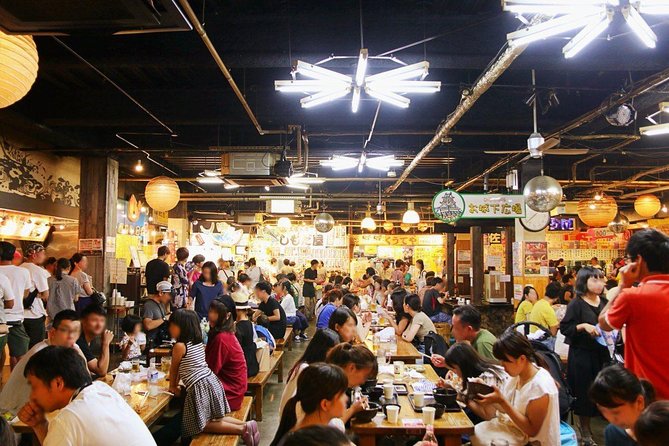
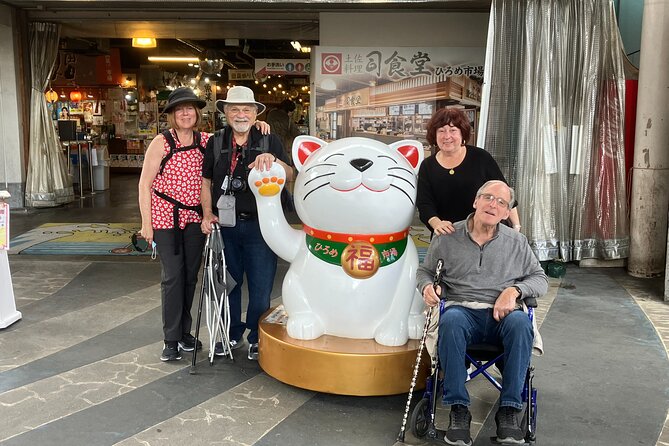
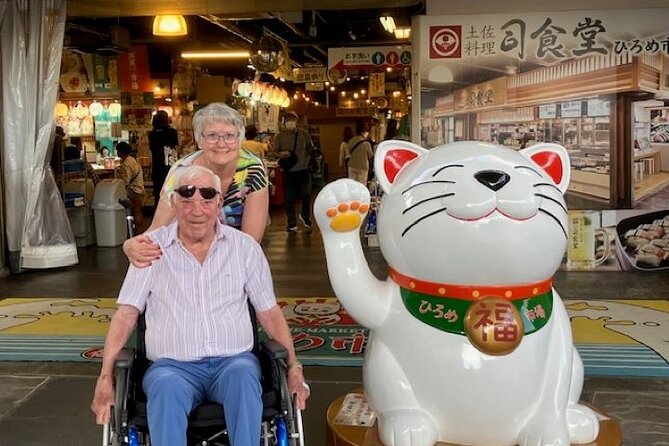
Hirome Ichiba is a market and food court under one roof, and it has the kind of scale that makes it feel like a Kochi institution. The building houses over 60 shops, and many of them are restaurants or izakaya (Japanese-style pubs).
Shared seating is part of the experience, so if you want quiet conversation, pick your moments. If you want a lively sense of how people actually eat and socialize, this is exactly where to spend time.
I like making this a mid-day anchor. Castle in the morning, market for lunch and snacks, then you still have enough energy for a temple, museum, or even a longer nature stop like Ryugado Cave. Your guide can also help with what to order and how to navigate the flow so you don’t waste time.
Sunday Market and Katsurahama Ryuogu Shrine: local rhythm when the timing lines up
If you’re in Kochi on a weekend, the Sunday Market is one of the best reasons to plan your date. It opened in 1690, and it stretches for about 1 kilometer from Otesuji avenue to the area near Kochi Castle. That long stretch is a clue: this is not a tiny curated market. It’s an outdoor, old-school shopping walk.
What you’ll like most depends on your taste, but the appeal is the variety of locally made and locally grown items—plus the chance to watch how people bargain and browse without needing a script.
For a different vibe, Katsurahama Ryuogu Shrine adds coastal scenery outside the city center. The area has strong currents, so swimming is prohibited, but you’re there for the views and the shrine setting rather than beach time. It’s a good choice when you want something scenic without a heavy museum commitment.
Ryugado Cave: the one-hour wow factor under the rock
Ryugado Cave is listed as one of Japan’s three major limestone caves. It stretches over four kilometers with formations shaped over about 175 million years, which is the kind of fact that makes photos feel too small.
The time commitment is about 1 hour, and you’ll want to keep that energy. This is the stop that changes the mood of the day fast. After shopping streets and markets, walking into a cool cave environment is a nice reset—almost like switching chapters.
Because the cave is a structured visit, it tends to work better when it’s one of your “planned stops,” not something you tack on at the end while your legs are already exhausted.
Price and value: is $570.69 per group a smart spend?
The price is $570.69 per group (up to 2 people), and the tour runs about 6 hours. That’s not cheap in the way a public transit day trip is cheap, but it’s also not trying to be. You’re paying for a licensed guide, a private vehicle, and a flexible day shaped around your interests.
Where the value really shows up:
- You’re not locked into a fixed circuit of stops you didn’t ask for.
- You’re not translating your way through history or shopping while trying to keep up.
- You get a vehicle to reposition between sites, which protects your time.
What’s not included matters for budgeting. Entrance fees, lunch, and personal expenses aren’t part of the base price. So if you pick multiple paid sites (like castle admission), your final day cost may climb. Still, many people find the guide-led interpretation makes those extra charges feel worth it.
Also note: guide entry fees are covered only for sights listed in the set selection. So make sure the sites you choose are the ones you actually want interpreted, not just ones you’re passing by.
Who should book this Kochi private tour
This is a strong fit if you:
- want a small-group private day rather than a bus schedule
- care about understanding what you’re seeing (castle history, temple pilgrimage connections, market culture)
- like food time built into the plan, not added as an afterthought
- prefer choosing a short list of sights in advance so the day feels efficient
It may be less ideal if you:
- want the cheapest possible Kochi day (because private guide + vehicle cost money)
- dislike stairs or heavy walking and don’t want to plan your stop mix around that
- only want a very casual stroll with no structured sightseeing
Guides praised in this program include Miyuki, Kay, Saori, Mika, Miya, Keiko, Koba, and Noriko. A common theme in their strengths is translating history into something you can actually use while also helping you navigate markets and decide what’s worth your time. The one drawback you should keep in mind is that guiding style can vary. If you prefer a specific pace or communication style, message your preferences in advance so your day matches your travel style.
FAQ
FAQ
How long is the Kochi tour?
It’s about 6 hours.
How many people is the group limited to?
The tour price is per group for up to 2 people, and it’s private (only your group participates).
Is pickup included?
Pickup is offered, and the tour includes a private vehicle.
What does the tour include?
You get a licensed local guide, a customizable tour with your chosen stops from the list, and a private vehicle.
Are entrance fees included?
No. Entrance fees are not included.
Is lunch included?
No. Lunch is not included.
Can I choose which sights I visit?
Yes. You select from a list of sights and landmarks before the tour.
Does the guide translate for you?
Yes. The guide provides translation to remove language barriers.
Are service animals allowed?
Yes, service animals are allowed.
Can I cancel for a refund?
You can cancel up to 24 hours in advance for a full refund.
Should you book this Kochi private tour?
I’d book it if you want Kochi to feel efficient and personal. The combination of licensed guide + private vehicle + choosing your own 3–4 stops is what makes this work, especially if you’re aiming to balance castle history with markets and everyday street life.
I’d skip it if your priorities are ultra-budget travel or you don’t want to handle stairs and walking time. If you do book, pick your stops with your energy level in mind—Kochi Castle is the one that demands the most commitment—then let the guide handle the rest.