REVIEW · KOCHI
Kochi Heritage walk for cultural immersion
Book on Viator →Operated by 5 Senses Walks · Bookable on Viator
Four cultures in one easy walk. That’s what makes this Kochi heritage experience such a good use of time. You’ll move from landmark to landmark and see how Portuguese, Dutch, Chinese, British, and Jewish presence shaped Fort Kochi’s look and feel, step by step.
I especially like the way the Chinese Fishing Nets (Cheena vala) set the tone right away, then the tour keeps connecting that early trade story to churches, cemeteries, and the spice trade. A second highlight is the guide-led storytelling, with names like Alex and Rajesh coming up in standout versions of the walk, plus Shan helping with smooth coordination. One consideration: snacks aren’t included, so plan to rely on the included coffee or tea and whatever you choose to buy at the spice markets.
In This Review
- Key highlights worth your attention
- What You’re Really Getting in 3 Hours Around Fort Kochi
- Price, Small Group Size, and What $55 Buys You
- Starting at Cheena Vala Chinese Fishing Nets
- Santa Cruz Cathedral Basilica: Portuguese Footprints in Stone
- St Francis Church: Wood, Mud, and Early Franciscan Presence
- Dutch Cemetery Road and the 1724 Tombstones
- Fort Kochi Beach: A Break Before the Markets
- Cochin Spice Market: How One Street Becomes a World Map
- Guide Power: Historical Stories That Actually Make Sense
- Who This Walk Is Best For
- Should You Book the Kochi Heritage Walk?
- FAQ
- FAQ
- How long is the Kochi Heritage walk?
- What is the meeting point for the tour?
- Where does the walk end?
- How much does it cost?
- What’s included in the price?
- Are snacks included?
- How many people are in a group?
- Is free cancellation available?
- Is a mobile ticket provided?
Key highlights worth your attention
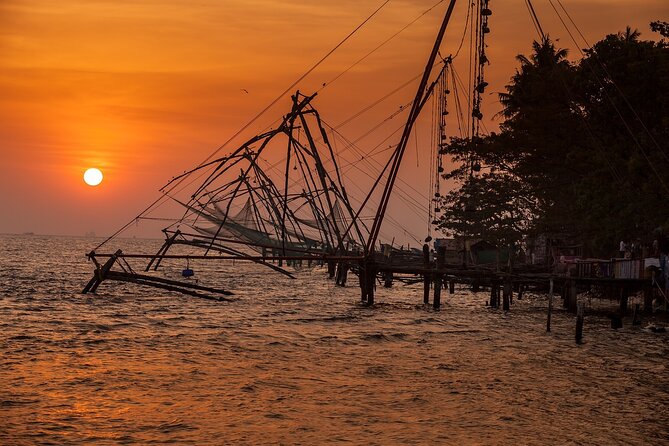
- Cheena vala starts the story: you begin with the Chinese fishing nets and their long trade legacy
- Portuguese landmarks at close range: Santa Cruz Cathedral Basilica and St Francis Church link back to early 1500s missions
- Dutch Cemetery Road is concrete history: 1724, 104 tombs and epitaphs, granite and red laterite
- You get a seaside breather: Fort Kochi Beach adds space and light before the markets
- Spices as a global network: Cochin Spice Market ties Kochi to traders from Greece, Rome, China, and Arabia
- Small-group feel: maximum 15 people, plus a mobile ticket for easy pickup
What You’re Really Getting in 3 Hours Around Fort Kochi
This is a guided heritage walk designed for cultural pattern-spotting, not a long museum-style visit. In about three hours, you cover a tight route where every stop points to a different thread of Kochi’s past, from maritime trade to Catholic missions to European communities and the spice economy.
The best part is that the walk doesn’t treat history like trivia. It shows you how different communities left physical marks you can still see: church architecture, cemetery details, and market life tied to spices that drew people from across the old world.
You can also read our reviews of more walking tours in Kochi



Price, Small Group Size, and What $55 Buys You

At $55 per person for roughly 3 hours, the value comes from what’s included with your walking time: a guide, coffee and/or tea, and entrance fees for the stops on the route. That matters in Kochi, where a self-guided walk can turn into decision fatigue fast, especially when you want context at each site.
The group limit of 15 travelers keeps things from turning into a slow, noisy parade. If you like asking questions and hearing explanations that land before you move on, small groups help.
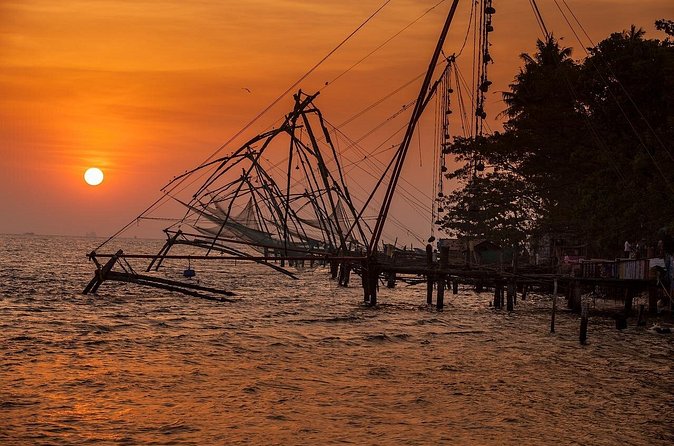
Starting at Cheena Vala Chinese Fishing Nets
Your walk begins at the Chinese Fishing Nets, known locally as Cheena vala. These aren’t just a photo stop. They’re a visible reminder that Kochi’s position on trade routes brought outsiders whose methods and tools became part of local life.
What I like about starting here is the momentum. You learn to read the nets as a cultural symbol, then you’re ready for the next stops where the same idea shows up again and again: foreigners arrive, trade expands, and local streets end up carrying those layers.
Practical tip: arrive with a little time to look closely before the group moves on. The nets look simple at first glance, but once you’re told what to notice, they become much more interesting.
Santa Cruz Cathedral Basilica: Portuguese Footprints in Stone
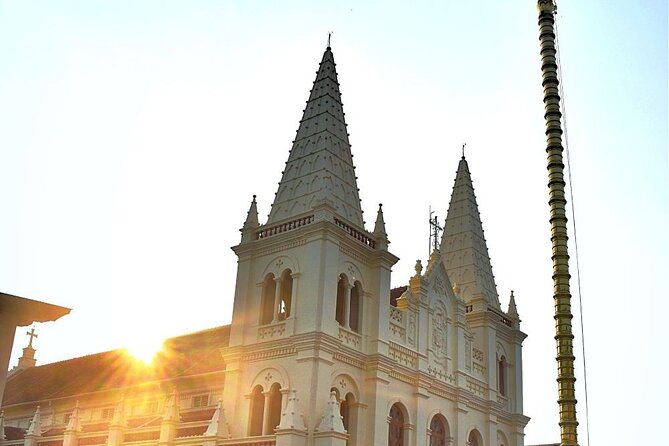
Next comes Santa Cruz Cathedral Basilica. Portuguese missionaries arrived in the early 1500s, including with the second Portuguese fleet under Pedro Álvares Cabral on 24 December 1500, and the basilica’s story is tied to that moment.
This stop helps you understand why Fort Kochi has church landmarks that feel distinctly tied to European Christian traditions. You’re not just seeing a building. You’re seeing a chapter when sea travel and religious missions moved together.
A small consideration: church areas can mean you’ll be walking at a respectful pace and following signage or guide direction. If you’re hoping for long linger time at every site, plan to treat this as a highlights route rather than slow sightseeing.
St Francis Church: Wood, Mud, and Early Franciscan Presence

Then you reach the Church of Saint Francis, with origins dating back to 1503. It connects to Portuguese Franciscan Friars, who reached Kochi alongside Pedro Alvarez Cabral, and the church’s early construction is described as wood and mud.
That detail is exactly why I think this stop works on a heritage walk. It makes the story human. Early presence wasn’t always grand stone-and-marble. It started with practical materials and a community building something that could exist in the moment.
If you’re the type who likes architecture and origins, this is one of the most meaningful parts of the route. It’s also a good place to ask your guide how the site’s early role tied into Portugal’s broader presence in the region.
You can also read our reviews of more historical tours in Kochi



Dutch Cemetery Road and the 1724 Tombstones
One of the most specific stops on the walk is Dutch Cemetery Road. The cemetery was established in 1724, and it includes 104 epitaphs and tombs. The descriptions of the tomb materials—granite and red laterite—help you see how the cemetery belongs to the local landscape and building traditions, not just to a foreign community.
The tombstones themselves point to Dutch and British nationals who once lived in the area. In a short walk, that can feel like a lot of names and dates to process, but your guide’s job here is to turn it into a readable story: who was there, why they were there, and how mortality became a kind of record.
What to watch for: take a minute to slow down and look at the tomb details. Even without reading every inscription, the cemetery format gives you a quiet sense of what settlement and trade meant on the ground.
Fort Kochi Beach: A Break Before the Markets
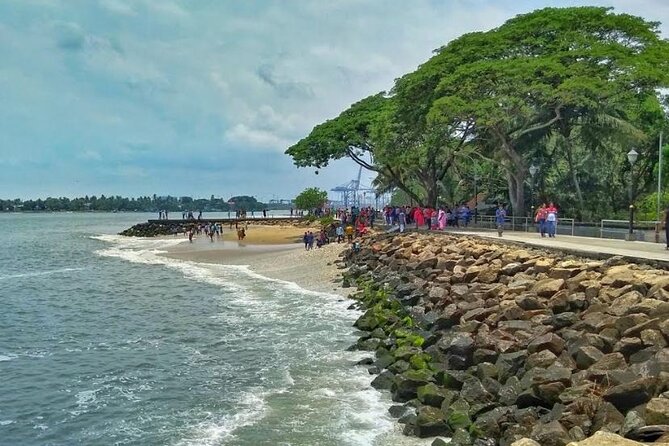
After the cemetery stop, you’ll get to Fort Kochi Beach, a waterfront known for its tranquil atmosphere, golden sand, and the calm presence of the Arabian Sea. This is your built-in reset.
I like this pacing because it prevents the walk from becoming only dense facts. You get a visual pause, plus a chance to stand back and see how the coastline frames daily life in Fort Kochi.
If you’re sensitive to sun or glare, take advantage of this moment to check your pace and water intake. The tour includes coffee or tea, but it does not list snacks, so keep your energy steady if you tend to get hungry.
Cochin Spice Market: How One Street Becomes a World Map
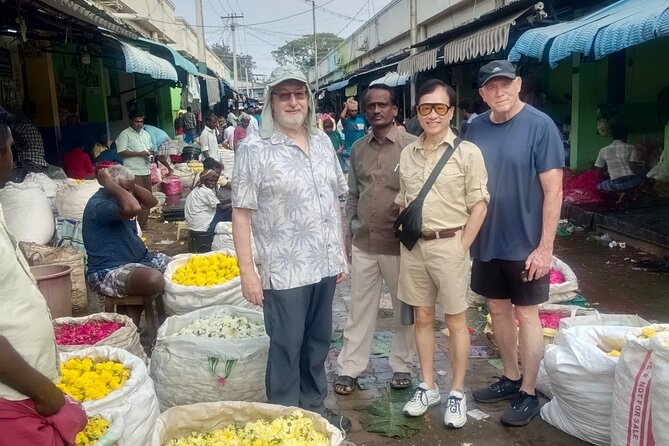
The walk ends at the spice market area in Fort Kochi, specifically the Village Spice Market at Bazaar Rd, Mattancherry (682002). Along the way, you’ll also visit the Cochin Spice Market, where Kochi’s trade role is front and center.
The market’s importance is tied to long-distance trading patterns going back far into the past, when Kochi attracted traders including Greeks, Romans, Chinese, and Arabs. It’s a great way to connect the earlier maritime story to something you can still smell and see today.
What to look for: ask the guide what spices are commonly used locally, and compare the colors and textures across stalls. Even if you don’t plan to buy a lot, this is the part where you turn historical context into something practical for your kitchen.
One caution: spice markets can encourage impulse buying fast. If you’re on a budget, set a simple target before you arrive—like one or two blends—and stick to it.
Guide Power: Historical Stories That Actually Make Sense
The difference between an okay walk and a great one is the guide’s ability to connect dots in plain language. In standouts, guides like Alex and Rajesh are highlighted for historical storytelling that stays engaging across the full route, rather than front-loading facts and then running out of steam.
I also love when coordination is handled well. The name Shan comes up for transport coordination, which matters because it helps keep you from losing the rhythm of a walking day.
Here’s how good guiding shows up to you: you arrive at a site thinking you’ll take photos, and you leave understanding why that location fits into the bigger Kochi story. That’s what you’re paying for, on top of the entrance fees and included drink.
Who This Walk Is Best For
This works well if you like culture-focused sightseeing that doesn’t require a big time commitment. It’s also a good fit if you want to learn the European and Asian influences that shaped Fort Kochi without spending hours planning separate visits.
I’d especially recommend it for:
- first-timers in Kochi who want a clear overview in a short window
- people who enjoy churches, cemeteries, and trade-era details
- anyone who wants a walking route with a guide helping you interpret what you’re seeing
If you’re looking for a very slow, deep architectural study where you linger for long periods at each site, you might find the 3-hour format a bit too tight. Treat it as an efficient highlights route, then add longer time on your favorite stop afterward.
Should You Book the Kochi Heritage Walk?
If your goal is to understand how Kochi became a crossroads, I’d say yes. For $55, you get a 3-hour guided walk across major Fort Kochi touchpoints—starting with Cheena vala, moving through Portuguese-era churches, pausing at the 1724 Dutch cemetery, then ending at the spice market where trade history becomes a daily reality.
Book it if you like learning with momentum and you’re okay with a route that keeps moving. Pass or adjust expectations if you want snacks included or if you prefer self-paced wandering without a structured timeline.
FAQ
FAQ
How long is the Kochi Heritage walk?
It runs for about 3 hours.
What is the meeting point for the tour?
The start is at the Chinese Fishing Nets, Fort Vypin, Puthuvype, Kochi (X69R+9V5).
Where does the walk end?
It ends at the Village spice market on Bazaar Rd, Mattancherry (682002), at the spice market area in Fort Kochi.
How much does it cost?
The price is listed as $55.00 per person.
What’s included in the price?
You get a guide, coffee and/or tea, and entrance fees.
Are snacks included?
No, snacks are not included.
How many people are in a group?
The tour has a maximum of 15 travelers.
Is free cancellation available?
Yes. You can cancel for a full refund up to 24 hours in advance of the experience start time.
Is a mobile ticket provided?
Yes, mobile ticket is listed as a tour feature.