REVIEW · KOCHI
Cultural Tour To Vaikom Village
Book on Viator →Operated by Globes Travel · Bookable on Viator
Backwaters look better from a canoe. I love how close the experience feels on the water, and I love the practical craft stops where you can see hand-spun and hand-woven textiles being made. It’s a great, low-key window into everyday Kerala village life, with an easy rhythm and a satisfying lunch included. One consideration: you should expect some walking and a canoe ride, so wear shoes you’re comfortable in.
You’ll start with a private car ride out of Kochi and into the Vaikom area, then move through temple time, backwater time, and workshop time. The day is built around meeting real makers and watching how materials become everyday goods, from cloth to coir rope to clay pots. If you’re hoping for a nonstop sightseeing marathon, this isn’t that. If you want calm, hands-on culture, it hits the mark.
In This Review
- Key highlights at a glance
- Setting out from Kochi: private car, local pace, and a morning start
- Vaikom Mahadeva Temple: ancient, simple, and easy to take in
- Small-boat backwaters: why the canoe ride matters
- From the village walk to the Khadi weaving centre
- Pottery lessons from the local potter
- Lunch break and optional extra village time
- Price, value, and who this tour fits best
- Should you book the Cultural Tour to Vaikom Village?
- FAQ
- What time does the Vaikom Village cultural tour start?
- Where does the tour meet in Kochi?
- How long is the tour?
- Is lunch included?
- What’s included in the price?
- Is a boat ride included?
- Do I need to pay for the temple entry?
- Is alcohol included with lunch?
- What if weather is bad?
- What is the cancellation policy?
Key highlights at a glance
- Canoe ride for close-up backwaters: natural narrow canals get you watching wildlife like fish and tortoises at water level.
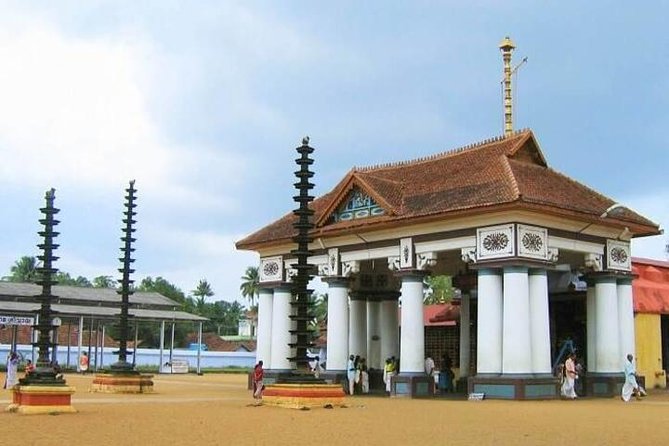
- Vaikom Mahadeva Temple: one of Kerala’s oldest Shiva temples, visited early and at an unhurried pace.
- Hands-on textile craft viewing: hand-spun and hand-woven work using cotton, silk, or wool yarns.
- Coir rope and pineapple-leaf mats: you’ll see coconut husks turned into coir rope and wild pineapple leaves woven into mats.
- Khadi weaving centre stop: a brief but focused look at how yarn becomes cloth.
- Traditional Kerala lunch included: fuel up after the village walk and craft watching.
Setting out from Kochi: private car, local pace, and a morning start
The day begins at C.P.T Junction / HaltWillingdon Island in Kochi, with a start time of 8:30am. From there, you’ll travel by air-conditioned vehicle to Vaikom. I like this setup because it keeps the early part of the day smooth—no scrambling for rides, and you’re out into the countryside before the heat really kicks in.
This is a private tour/activity, so only your group participates. That matters on a day like this, where you’re spending time close to people who are working and talking. A private format also helps you keep the pace you want, whether that means lingering for questions or moving on quickly when the schedule is tight.
The total time on the ground is about 5 to 6 hours. That’s long enough to feel like you truly got out of Kochi, but not so long that you’ll feel cooked by mid-afternoon. Also, you’ll have bottled water and lunch included, which is a simple value win. The only thing not included is alcoholic beverages, so plan on water or non-alcoholic options with meals.
One more small but helpful detail: the experience uses a mobile ticket, and you’ll receive confirmation at booking. If you’re the type who hates last-minute paper tickets or can’t stand figuring things out on your phone mid-trip, this is a good way to keep the morning stress low.
You can also read our reviews of more historical tours in Kochi
Vaikom Mahadeva Temple: ancient, simple, and easy to take in
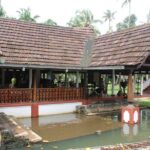
Your first major cultural stop is the Vaikom Mahadeva Temple. It’s located in Vaikom and is described as one of the oldest Shiva temples in Kerala, with a strong reputation and long history in the region. The entry here is free for this experience, so you don’t have to worry about extra costs before you even start.
I find temples like this work best when you treat them like a place to slow down rather than a photo checklist. You’ll get the chance to see the sacred space in context—then move on to the more everyday rhythm of village life. That contrast is one reason this tour flows so well: spirituality first, then backwaters, then crafts.
Because the day includes walking after the temple, it helps to keep your hands free. Wear something comfortable and modest enough for a temple visit. You don’t need to overthink it, but do give yourself the option to be respectful and unbothered.
Small-boat backwaters: why the canoe ride matters
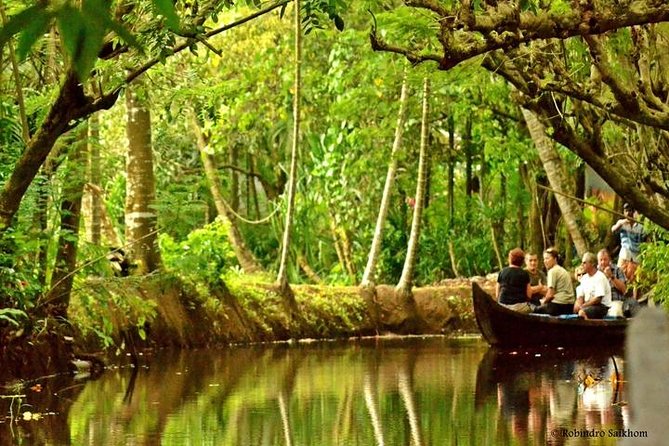
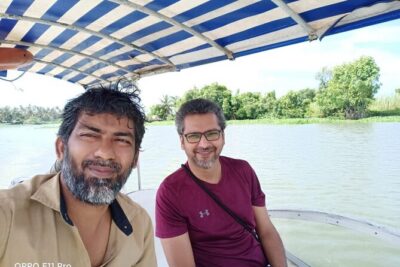
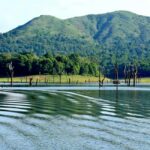
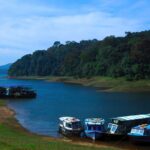
This is the part many people remember, and for good reason. You’ll do a backwater cruise by open country boat through natural narrow canals. The cruise is described as relaxing and it’s built for watching everyday water life close up, including fish, water snakes, shell fishes, tortoises, and frogs.
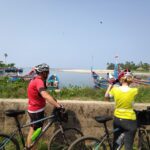
Then comes a second water moment: a canoe ride. This is where the experience turns from you looking at the backwaters to you experiencing them from almost inside the canals. The canoe ride also gives you a different angle on the shoreline—small bends, quiet water edges, and that sense of being in the working geography of Kerala, not just a scenic postcard.
A practical tip: backwaters are weather-sensitive. The experience notes that it requires good weather, so if conditions are poor, you’ll be offered a different date or a full refund. Don’t assume you’ll control that part—build some flexibility into your Kochi schedule.
Also, while the day isn’t described as strenuous, it is physical in a normal-travel way: you’ll be getting on and off boats and moving through the area around the water. If you have balance issues, plan for extra care with steps and footing.
From the village walk to the Khadi weaving centre
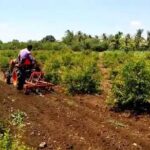
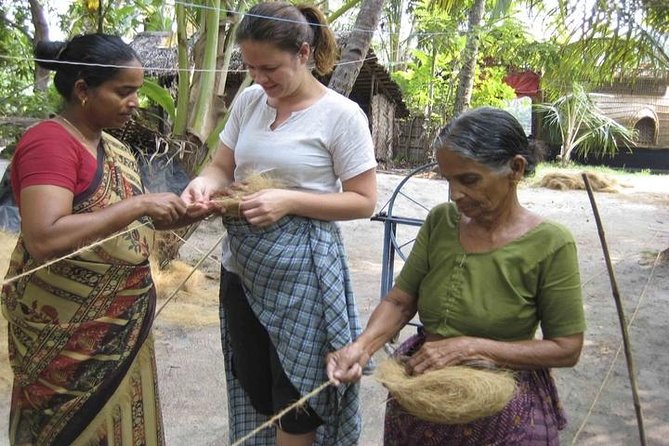
Once you’re back on land, the day shifts into what I’d call village-life detail. You’ll walk through the village and interact with local villagers and their families. That family-centered feel is important because many of the crafts aren’t just demonstrations; they’re livelihoods. You’re not only watching processes—you’re learning how people earn their income from what they know.
The craft focus is strong and varied:
- You’ll see how villagers produce hand-spun and hand-woven cloth.
- The materials mentioned include cotton, silk, or wool yarns, which helps you understand that this isn’t one single style of weaving.
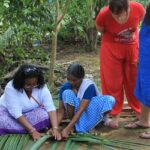
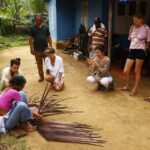
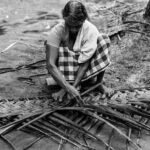
- You’ll also watch ladies weave coir ropes from dried coconut husks. That one is satisfying because you can connect the raw material (coconut husk) to the finished practical item (rope) without needing a lot of imagination.
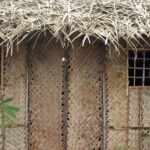
- You’ll see straw mats woven from wild pineapple leaves. It’s a clever reminder that village craft often depends on what’s locally available.
After this broader village walk, you’ll stop briefly at the Khadi Weaving Centre. The idea here is to see hand spinning and hand weaving more directly—again tied to real yarn sources. Khadi is associated with cloth made from hand-spun yarn, and in this stop you’ll get to see how the process supports local earning.
If you’re wondering whether these craft stops feel like rushed photo stops, the structure suggests otherwise. There’s time built in for a walkthrough and for short conversations, plus another village moment after the main lunch. That means you can get the basics without feeling like you’re being herded.
One small “pay attention” note: if you’re asking questions, do it in a friendly, simple way. People tend to respond best when you show curiosity about the work itself—how long something takes, what materials are used, or what’s hardest about it—rather than treating it like a museum. You’ll get more than a one-minute answer, and the day will feel more real.
Pottery lessons from the local potter
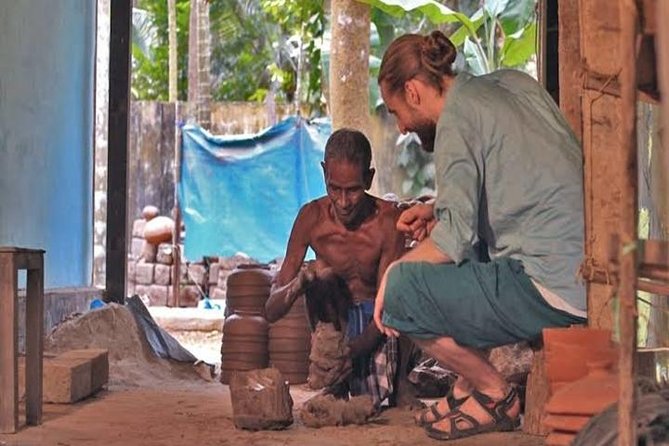
Later in the village circuit, you’ll also watch a local potter create pots and vases. The clay designs are described as featuring ethnic designs in the pottery.
This part works nicely after textiles because it’s another way to see material-to-object transformation. Cloth goes from yarn to fabric; pottery goes from clay to shape and pattern. Watching a potter at work gives you a different texture of the craft economy—less thread, more hands and form.
As with the textile stops, the value isn’t only in seeing the finished items. It’s in understanding the process and how skill passes from practice to repetition. Even if you’re not buying anything, you’ll leave with a clearer sense of how common these crafts are as daily work, not just ceremonial art.

Lunch break and optional extra village time
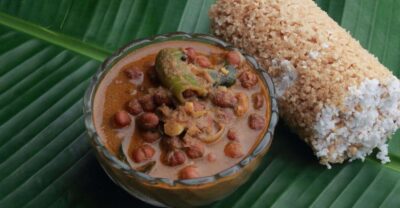
After the craft and pottery viewing, you’ll enjoy a traditional Kerala lunch. Since lunch is included, you can plan the day without hunting for food between stops. That’s a bigger deal than it sounds—on village tours, the time gaps can be annoying if you’re trying to manage meals alone.
The schedule also notes that if time allows, you can spend some more time around the village. I like this option because it gives you control: if you want to ask more questions, slow down, or just soak in the quiet pace, you can. If you’re tired, you can still rely on the tour ending back where you started.
For what it’s worth, this is one of those tours where lunch often feels like part of the story. After watching hands turn raw materials into useful goods, you’re better prepared to appreciate food as another everyday craft of place.
Price, value, and who this tour fits best
At $106.67 per person, this tour isn’t the cheapest thing in Kochi. But it also isn’t just a one-stop sightseeing ticket. You’re paying for a full half-day format with air-conditioned vehicle, bottled water, lunch, and all fees and taxes included. You’re also getting the kind of backwater access that matters: an open country boat cruise plus a canoe ride, not just viewing from the shore.
That’s the value equation I’d use: transportation + water time + a cultural itinerary + meals. If you’d otherwise try to stitch together temple visits, backwater boating, and craft stops on your own, it can easily cost similar money once you factor in guide time, transport, and boat logistics.
Who it suits best:
- You want authentic village life rather than only major sights.
- You enjoy watching people work—textiles, rope making, weaving, pottery.
- You’re okay with a moderate fitness level, given the walking and canoe ride.
Who might hesitate:
- If you dislike boats or you have limited mobility, the canoe ride and walking may feel like too much.
One final note on pacing: the tour runs about 5 to 6 hours. It’s not designed to wear you out with constant motion, but it does keep moving through meaningful stops. It’s the right length if you want culture without sacrificing your whole day.
Should you book the Cultural Tour to Vaikom Village?
I’d book this if you want a Kerala day that feels like it belongs to the place, not just to the itinerary. The two biggest strengths are the canoe-close backwaters and the practical craft viewing—hand-spun cloth, coir rope, pineapple-leaf mats, plus pottery. It’s a rare balance of scenery, culture, and everyday work, with lunch and transport already taken care of.
I’d skip it or look for an alternative if you’re uncomfortable with walking or you’re worried about canoe time. Otherwise, this is a strong value play for a first or mid-trip day in the Kochi area—especially if you’d rather spend your time with makers than with crowd-heavy attractions.
FAQ
What time does the Vaikom Village cultural tour start?
The tour starts at 8:30am.
Where does the tour meet in Kochi?
The meeting point is C.P.T Junction / HaltWillingdon Island, Kochi, Kerala 682029, India.
How long is the tour?
It runs about 5 to 6 hours.
Is lunch included?
Yes. Lunch is included.
What’s included in the price?
Included items are bottled water, lunch, an air-conditioned vehicle, and all fees and taxes.
Is a boat ride included?
Yes. You’ll have a backwater cruise by open country boat through narrow canals, plus a canoe ride.
Do I need to pay for the temple entry?
No. Admission is listed as free for the experience.
Is alcohol included with lunch?
No. Alcoholic beverages are not included.
What if weather is bad?
The experience requires good weather. If it’s canceled due to poor weather, you’ll be offered a different date or a full refund.
What is the cancellation policy?
You can cancel for free up to 24 hours in advance for a full refund. If you cancel less than 24 hours before the start time, the amount paid is not refunded.