REVIEW · KOCHI
Fort Kochi & Chinese Fishing Nets Private Walking Tour
Book on GetYourGuide →Operated by Carnival Tours Kochi · Bookable on GetYourGuide
Fort Kochi turns history into a walk. You get Portuguese- and Dutch-era landmarks plus the working Chinese Fishing Nets in one tight route. The best part is that it’s a private setup with an English guide who can steer the pace toward what you care about, like Babu did when he matched our interests and explained what’s behind the places, not just the facts.
I love two things most: first, the mix of big-name sites and everyday streets, from St. Francis Church (built in 1503) to the shops of Jew Town; second, the way the guide helps you read the scene at the beach before you even take photos. One possible drawback: the tour visits multiple places of worship, so you’ll need shoulders-and-knees-covered clothing, and some monument interiors may restrict photography.
In This Review
- Key Points You’ll Notice on This Fort Kochi Tour
- Fort Kochi in Three Hours: How the Route Works
- Where You Meet and What to Bring Before You Start
- St. Francis Church (1503): The European Timeline in One Stop
- Santa Cruz Cathedral Basilica: Murals That Need a Slower Look
- Chinese Fishing Nets by the Beach: Learn the Mechanism
- Matancherry Palace and the Portuguese Gift to the King of Kochi
- Jew Town Walking: Antiques, Spices, and the Street-Level Story
- Pardesi Synagogue: One of the Oldest Active Places of Worship
- Dutch Palace Timing: Plan for Closures
- Price and What You Actually Get for $30
- Who Should Book This Fort Kochi Walking Tour
- Quick Practical Tips That Make This Day Go Better
- Should You Book This Fort Kochi Private Walking Tour?
Key Points You’ll Notice on This Fort Kochi Tour

- Chinese Fishing Nets mechanism explained so you understand the gears, not just the view
- St. Francis Church (1503) and the story of Vasco da Gama’s early burial here
- Portuguese and Dutch influence across churches and Matancherry landmarks
- Matancherry Palace murals tied to Hindu epics, reached via a short tuk-tuk hop
- Jew Town browsing plus the interiors of the Pardesi Synagogue, when open
Fort Kochi in Three Hours: How the Route Works

This is the kind of tour that makes Fort Kochi feel manageable. Three hours sounds short, but the route is designed to move efficiently between standout heritage spots and the streets where you can actually see local life around them. You’re not stuck in a bus loop. You’re walking the neighborhood and using quick tuk-tuk rides between key clusters.
For me, the value is in the structure. You start with the oldest layers of European presence in Kerala, then shift to the Portuguese and Dutch architectural fingerprints, and finally land in Jew Town where Jewish community life is part of the street scene. Along the way, you also hit the Chinese Fishing Nets by the beach, which turns a landmark photo into a real explanation you can hold in your head.
Private group also matters. With a private guide, you’re more likely to get answers to the questions you actually have, instead of waiting for someone else’s pace. Based on what I’ve seen from strong guides in this area, the best conversations happen when you slow down for 60 seconds in the right place—like in front of the nets or inside a church where murals make the room feel bigger than the building’s size.
You can also read our reviews of more walking tours in Kochi


Where You Meet and What to Bring Before You Start

You meet at Carnival Tours & Travels on Princess Street, near Shop N Save and opposite Block Prints. Arrive at least 5 minutes early so you can start on time and avoid delays—especially since the stops include houses of worship.
Bring:
- Comfortable shoes (you’ll be walking)
- Water
- A light plan for the heat and humidity (Fort Kochi can feel warm even on calmer days)
Dress code is important here. You’ll be asked to wear clothing that covers your shoulders and knees because you’ll visit places of worship. If your usual travel wardrobe is tank tops and shorts, I’d adjust before you go—this saves time and keeps you from getting turned away at a door.
St. Francis Church (1503): The European Timeline in One Stop

St. Francis Church is often the anchor for Fort Kochi sightseeing, and with good reason. This one was built in 1503, and it carries a story that connects Kerala to the earliest era of European navigation.
The guide helps you place it in context. You’ll learn about how Vasco da Gama—the first European explorer to discover the sea route to India—was initially buried here before his remains were taken to Lisbon. That detail changes how you look at the church. It’s no longer just an old building. It becomes part of a larger story of trade routes, contact, and the way history physically moves with ships.
What to watch for while you’re there:
- The feel of the space and what the guide says about its age
- Any murals or painted elements you’re allowed to view and photograph
- How the guide links this stop to the wider Portuguese presence in the area
Photography is not guaranteed inside every monument. If you want photos, I’d ask your guide first rather than guessing. In practice, a quick question saves you from awkward re-doing after you’ve already stepped into the wrong spot.
Santa Cruz Cathedral Basilica: Murals That Need a Slower Look
Next up is the Santa Cruz Cathedral Basilica, also built in the 1500s. It’s the kind of church where the outside gets your attention, but the inside is where it sticks with you. The big draw here is the paintings and murals.
The reason this stop is worth your time is that it shows how European church art adapted to a place already full of long-standing cultural traditions. The murals and interior artwork are more than decoration. They’re a visual language, and your guide’s job is to help you notice what you might otherwise miss when you’re moving quickly.
Practical tip: wear the right shoes and keep your pace steady. Churches can encourage you to linger, and your route timing depends on moving along with the group. If you’re someone who likes to stand back and take the room in first, do it early—then go closer for specific paintings when your guide points them out.
Also, like other religious interiors, photography may be restricted. When it is, your best substitute is careful looking: zoom in on details with your eyes first, then rely on what’s permitted.
Chinese Fishing Nets by the Beach: Learn the Mechanism
The Chinese Fishing Nets are a signature Fort Kochi sight, but the tour approach is what makes this different. You don’t just watch the nets and take pictures. You learn how the mechanism works, which is the whole point.
These are a traditional fishing method from the beach, introduced by Chinese explorers. When your guide explains the system, you start to notice how the whole setup is built to lift, lower, and manage nets as the water conditions change. It turns what could be a quick photo into an actually understandable process.
Here’s how to make the stop work for you:
- Pause long enough to understand the motion and the purpose of the different parts
- Keep your camera ready, because the view is photogenic, but don’t let that rush you past the explanation
- Ask one question if you’re curious about timing or how it’s operated
If you enjoy practical learning—how something works, not just what it looks like—this is the moment where the tour pays off. Even if you’re not a fishing-tech nerd, you’ll leave feeling like you got the gist of how a local tradition functions.
You can also read our reviews of more private tours in Kochi




Matancherry Palace and the Portuguese Gift to the King of Kochi
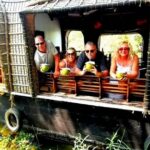
After the beach stop, you take a brief tuk-tuk ride to Matancherry and Jew Town. This short ride is worth it because it cuts the walking strain while still keeping you close to the action.
At Matancherry, the highlight is Matancherry Palace. Here’s the key fact: the palace was gifted to the King of Kochi by the Portuguese. That single detail explains why you’ll see European influence alongside local styles and storytelling.
The palace is especially known for its murals from Hindu epics. This is where the guide’s role matters again. Murals can look like decoration if you don’t have a way to read them. With guidance, you understand that these paintings are telling stories that connect to broader cultural traditions, not just European aesthetics layered on top.
A practical reality: palace interiors may have rules about photos. If you see a sign or hear a hint from your guide, follow it quickly. And if you’re more interested in art than in architecture, spend your time on the murals your guide names rather than trying to scan everything at once.
Jew Town Walking: Antiques, Spices, and the Street-Level Story
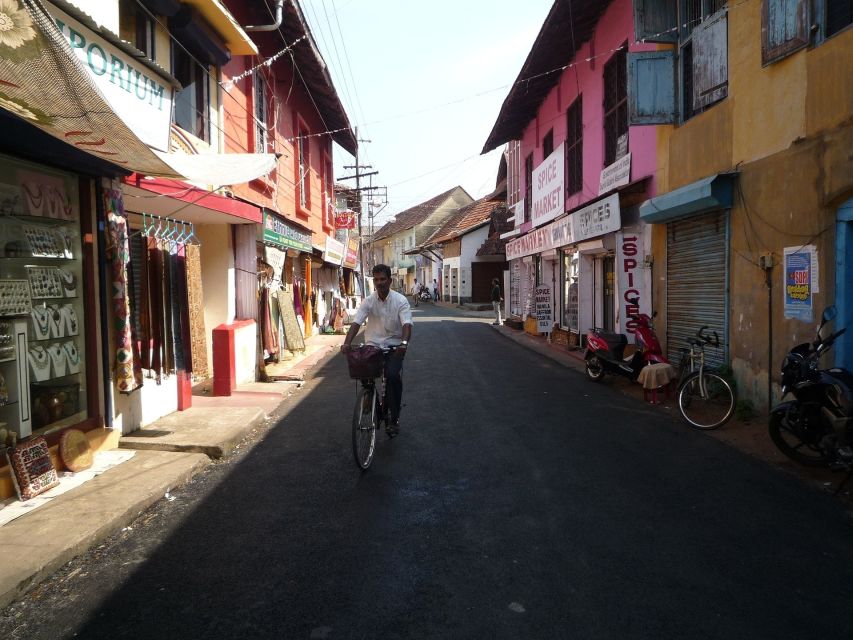
Jew Town is where the tour shifts from monument mode to street mode. You’ll walk through the area’s antique and spice shops, and this is a strong part of the experience because it keeps the heritage sites from feeling like distant artifacts.
What I like here is that you’re not just passing through. Your guide connects the Jewish presence, European colonial influence, and the local trading culture into a street-level picture you can actually see. Fort Kochi is a port city experience. Jew Town reflects that. It’s about commerce, community, and the kind of everyday movement that comes with long-distance trade.
How to enjoy this section:
- Bring a little patience for browsing. These shops can tempt you to stop, even if you’re not planning to buy.
- Ask your guide what to look for if you’re interested in spices or antiques. You may learn what items mean locally, not just what the shop is calling them.
- If photography is tempting in the shops, ask first. Some shopkeepers are fine with it; some aren’t.
And yes, you may be offered souvenirs, but the tour itself doesn’t include shopping time as a formal part. If you want more time in the shops, it’s a good idea to mention that early in the walk so your guide can adjust without cutting major stops.
Pardesi Synagogue: One of the Oldest Active Places of Worship
Pardesi Synagogue is the Jewish highlight of the route, and the tour gives you a chance to see why it matters. You’ll visit ornate interiors at Pardesi Synagogue, described as one of the oldest active Jewish places of worship in the world.
This stop is more than a photo moment. When you’re standing inside, the architecture and ornamentation help you understand how enduring this community presence has been. It’s also the type of location where a guide’s background knowledge really helps. You’re not just reading plaques—you’re learning what the space represents to worshippers and to the broader community over time.
One very important detail: the Jewish Synagogue is closed on Fridays, Saturdays, and Jewish holidays. If your tour lands on one of those days, access may differ. Your best move is to check your day of travel before you get your heart set on specific interior viewing.
Even when the synagogue is open, respect matters. Cover shoulders and knees, speak quietly, and follow whatever guidance your guide gives for where you can stand and how long you can take inside.
Dutch Palace Timing: Plan for Closures
The tour information notes that the Dutch Palace is closed on Fridays, Saturdays, and Jewish holidays (the same closure window as the synagogue). That means your route might focus more on what’s accessible on your specific day.
I like tours that tell you this upfront, because it prevents that annoying feeling of arriving somewhere and realizing you can only see the outside. Instead of guessing, you’ll have the information you need to decide whether you should choose a different day.
If you do travel during a closure day, keep your expectations flexible. You may still learn a lot from your guide, especially about why the Dutch presence left visible marks in the city. But if your priority is interior viewing, timing becomes part of the value.
Price and What You Actually Get for $30
At $30 per person for about three hours, this tour is priced to be accessible while still including the parts that usually cost extra: an English-speaking guide, tuktuk rides within the landmarks of the tour, and entrance fees.
That combination changes the math. In many places, a walking tour can be cheap but then you’re hit with entrance tickets and local transport costs later. Here, you’re less likely to get surprised mid-day. Also, private guide + entrance fees means you’re paying for more than directions—you’re paying for someone to help you understand what you’re seeing, including how the fishing nets work and what the church stories connect to Portuguese and Dutch influence.
And the guide quality isn’t generic. One highlight from a verified booking was Babu, praised for being knowledgeable and for tuning the tour to your interests. Another review mentioned deep understanding of Kerala’s culture plus political and economic context. Even if you don’t care about politics on vacation, that kind of context can help explain why certain landmarks were built where they were and how communities shaped the city.
Who Should Book This Fort Kochi Walking Tour
This tour fits best if you:
- Like walking tours but also want a guide to keep you on track
- Want European-era churches plus Jewish heritage and Chinese fishing nets in one session
- Enjoy learning how things work, like the Fishing Nets mechanism, not just looking at them
- Prefer a private group format so the guide can adjust to your interests
It’s not the best match if you:
- Have limited mobility (the tour is not recommended for people with limited mobility)
- Are on a cruise ship (this tour won’t be provided to cruise ship passengers)
- Don’t want to handle dress-code requirements for places of worship
If you’re traveling with older kids, it can be a decent option too, as long as they can handle the walking and you’re okay with museum-like pacing inside churches and synagogues.
Quick Practical Tips That Make This Day Go Better
A few things I’d do to make your day smoother:
- Wear comfortable shoes you can walk in for several hours of stopping and starting.
- Bring water and take a short sip break before you feel tired.
- Plan for potential photo limits inside monuments—ask your guide early.
- Keep your day flexible enough to handle closures on Fridays, Saturdays, and Jewish holidays, especially for the synagogue and Dutch Palace.
The tour is clearly designed as a heritage route. When you treat it like that—slow down in the right places—it becomes more than a list of stops.
Should You Book This Fort Kochi Private Walking Tour?
Book it if you want a guided, efficient way to connect Fort Kochi’s European church landmarks, the Chinese Fishing Nets mechanism, and Jew Town into one coherent story. The private guide setup is the biggest reason the price makes sense, especially because entrance fees and tuk-tuk rides are included. If you enjoy explanations that connect places to how Kerala has been shaped over time, this tour will feel satisfying by the time you reach the synagogue area.
Skip it or choose another option if you have mobility limits, you’re traveling on a day when the synagogue or Dutch Palace closures will frustrate you, or you’re not comfortable with the dress-code expectations. If those aren’t issues for you, this is a strong way to spend a few hours in Fort Kochi without missing the essential sights that define the neighborhood.